
The house, the crew and the money.
Built for the Zimbabwean builder: houses and stages, estimates that price off a rule book, buying against a site, casual crews paid eight different ways, and work claimed as it is completed.
Construction software that speaks the language used on site
A building site does not run on general-ledger vocabulary. It runs on houses, stages, gangs, claims and advances, and any system that asks a site clerk to think in journal entries will be filled in badly or not at all. Vantage Point's construction module is written in the site's own words, and does the accounting underneath without anybody on site having to know it is happening.
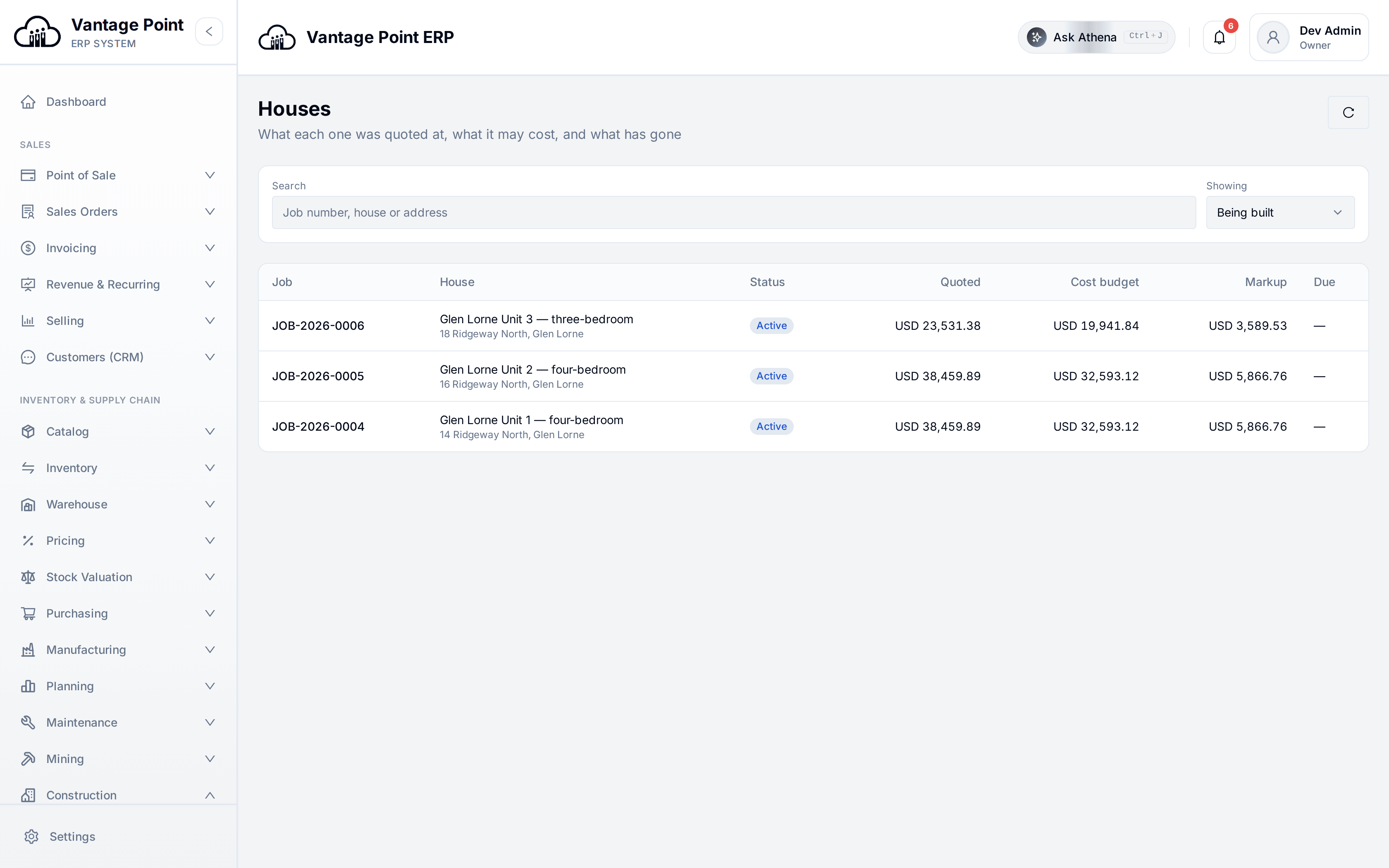
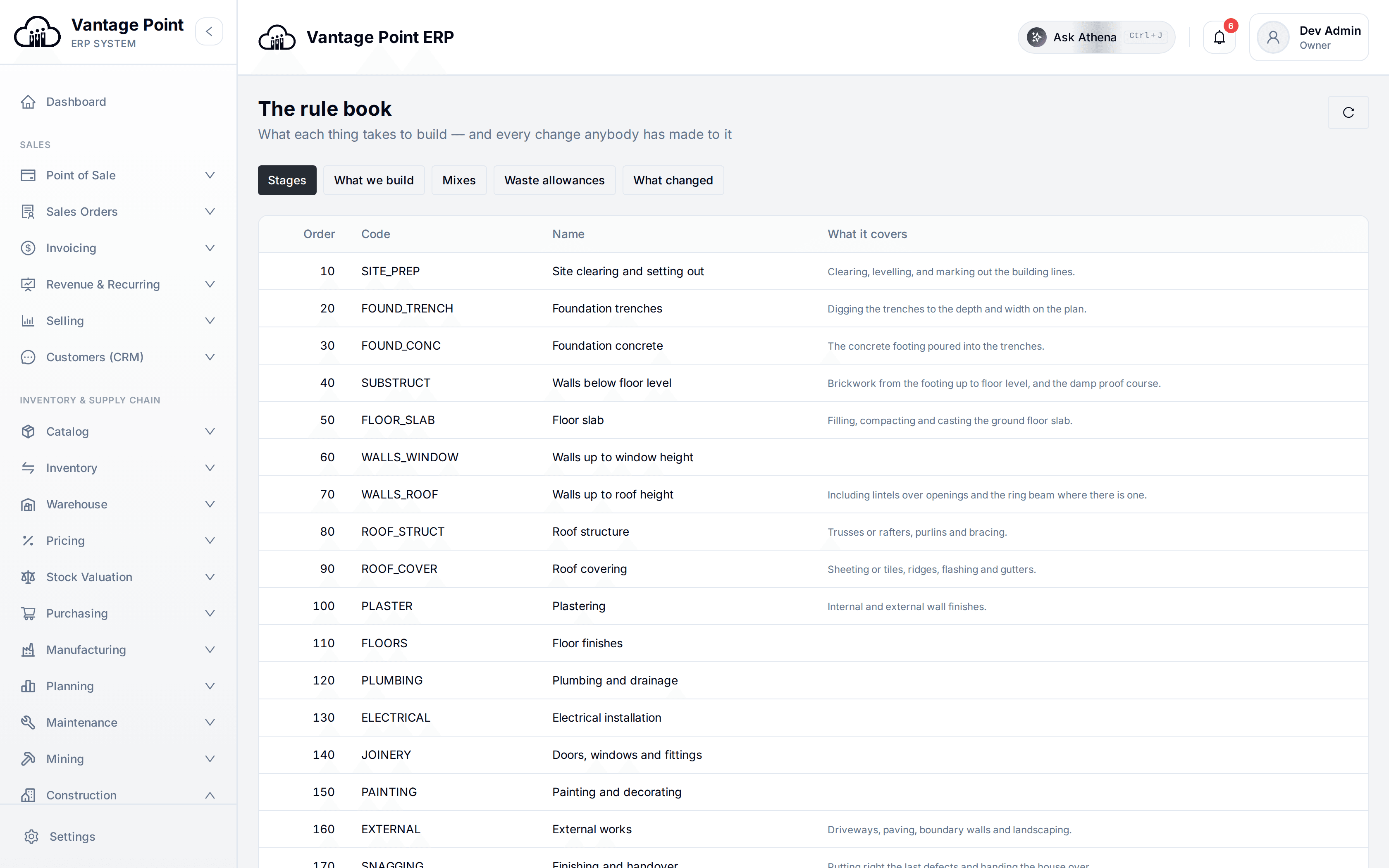
Estimating is the part most builders lose money on, so quantities are worked out from a rule book you define once — the build elements and mixes a house is made of — rather than from whoever is estimating this week. Buying happens against a specific house and a specific stage, so cost lands where the work is instead of in a general overhead that nobody can unpick at the end. What was delivered, what was used and what is still standing on site is recorded by the people who are there.
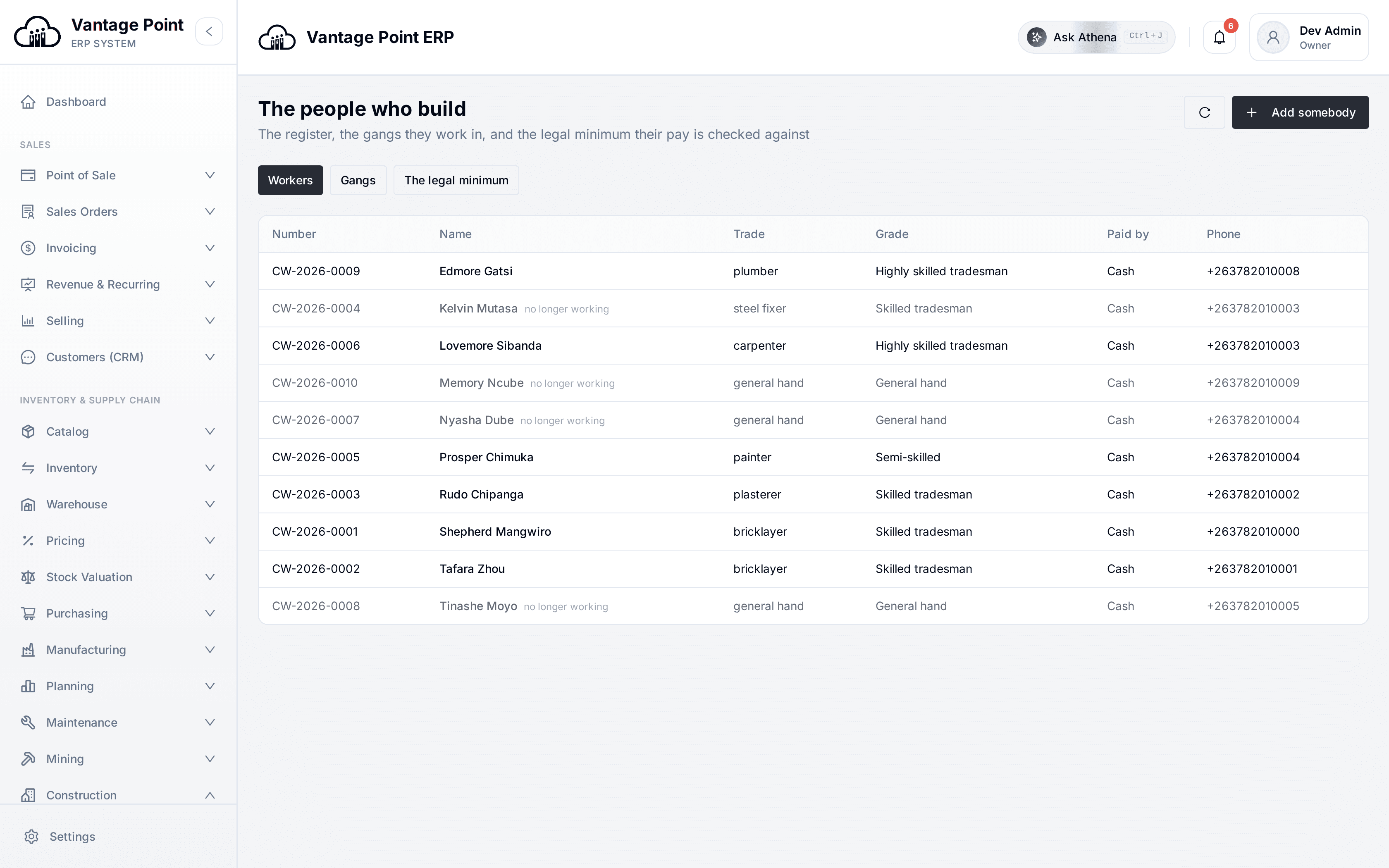
Paying people is where the module does its hardest work. Zimbabwean building labour is paid in at least eight different ways — day rate, task rate, measured work, piece rate and others — often on the same site in the same week, and the legal minimum has to be checked in the middle of the calculation rather than applied at the end. One engine handles all of it, work is claimed and measured before it is paid, and advances are recovered from the claims they were paid against automatically.
A site is not an office, and the system should not pretend it is.
The vocabulary is the one used on site — houses, stages, gangs, claims, advances — and the accounting happens underneath it without anybody on site having to think about it.
Construction, asked and answered.
Can it cost each house separately?
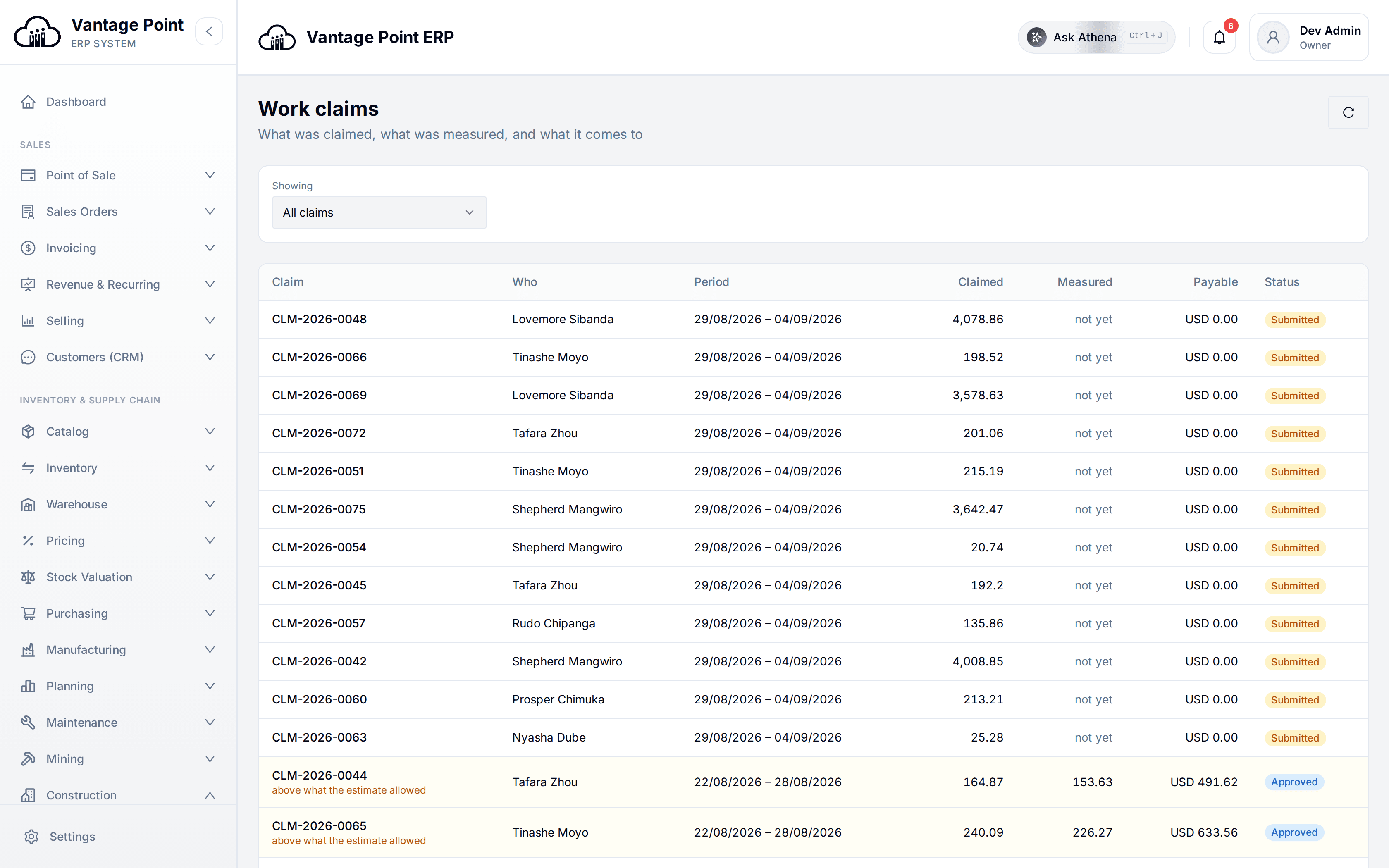
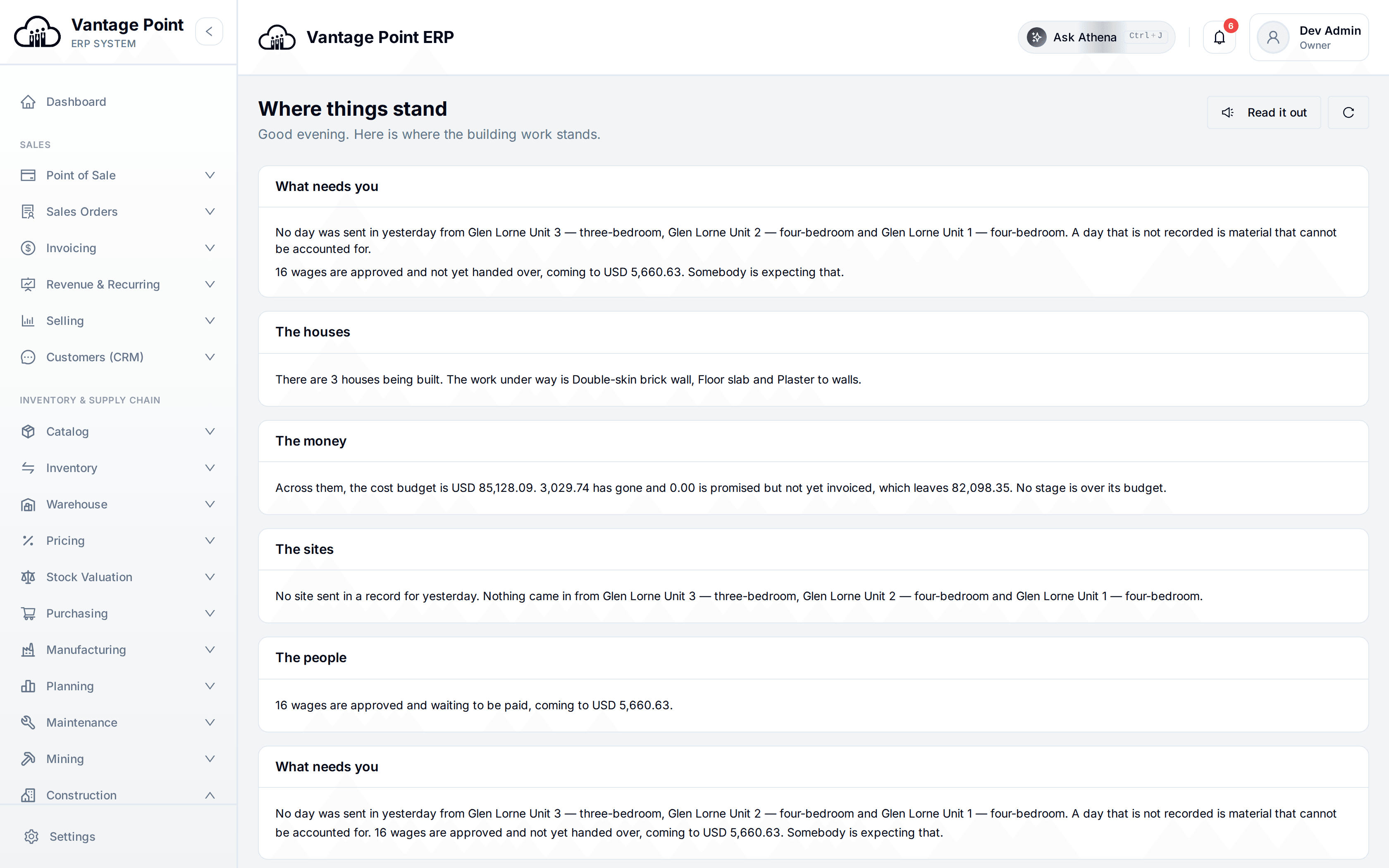
Yes. Every order, delivery, issue to site and labour claim is recorded against a specific house and stage, so cost to date per unit is a live figure rather than an allocation done afterwards. The briefing screen shows where every house stands and what is holding each one up.
How does it handle casual and contract labour?
Contract workers and gangs are held separately from permanent staff, each with the paperwork that kind of engagement needs. Pay agreements cover day rate, task rate, measured work, piece rate and the rest, the legal minimum is enforced during the calculation, and work is claimed, measured and approved before it is paid.
Does it produce estimates?
Yes, from a rule book: you define the build elements and mixes once, and an estimate for a house is worked out from them. Two estimators pricing the same house therefore price it the same way, and when material costs move the estimate moves with them.
Can I see what materials are actually on site?
Yes. Deliveries to site, materials issued to work and what remains standing are recorded on the site screen, against the house and stage they belong to, so the difference between what was bought and what was built into the house is visible.
The rest of the system.
ONE LEDGER UNDERNEATH IT ALLTake the high ground.
Set up your first store, till and ledger in an afternoon.