Agreed, picked, delivered.
The chain between a customer saying yes and the goods leaving the yard: order book, pick lists, delivery notes and returns, with stock committed the moment the order is confirmed.
Sales order and delivery management, from the yes to the delivery note
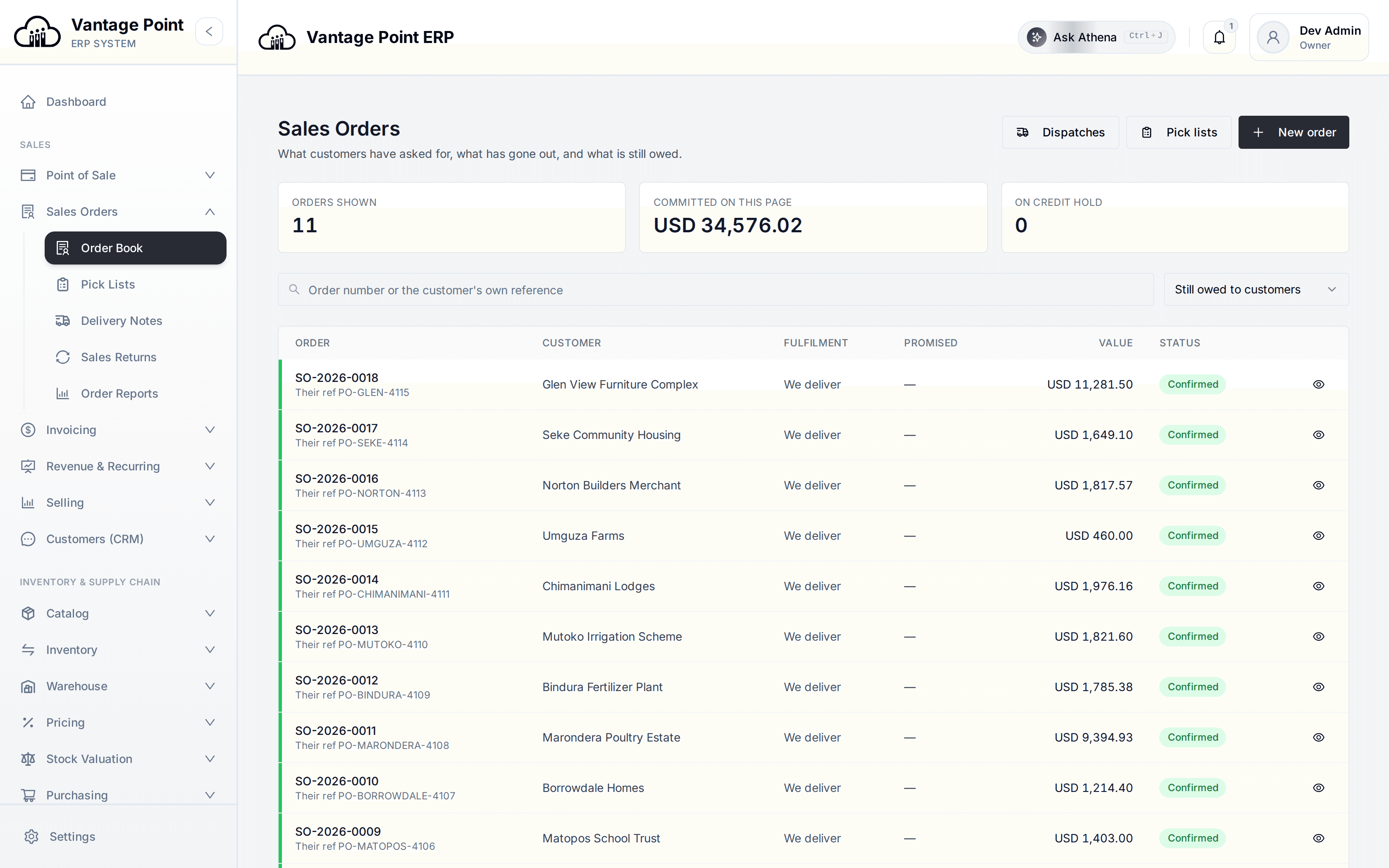
A sales order is a promise to a customer, and most of the trouble in fulfilment comes from making the same promise twice. Somebody confirms an order for a hundred units, somebody else sells eighty of the same units over the counter that afternoon, and the shortfall is only discovered when the truck is being loaded. Vantage Point stops that at the source: confirming an order reserves the stock against it, and the free-to-sell figure everyone else works from drops accordingly.
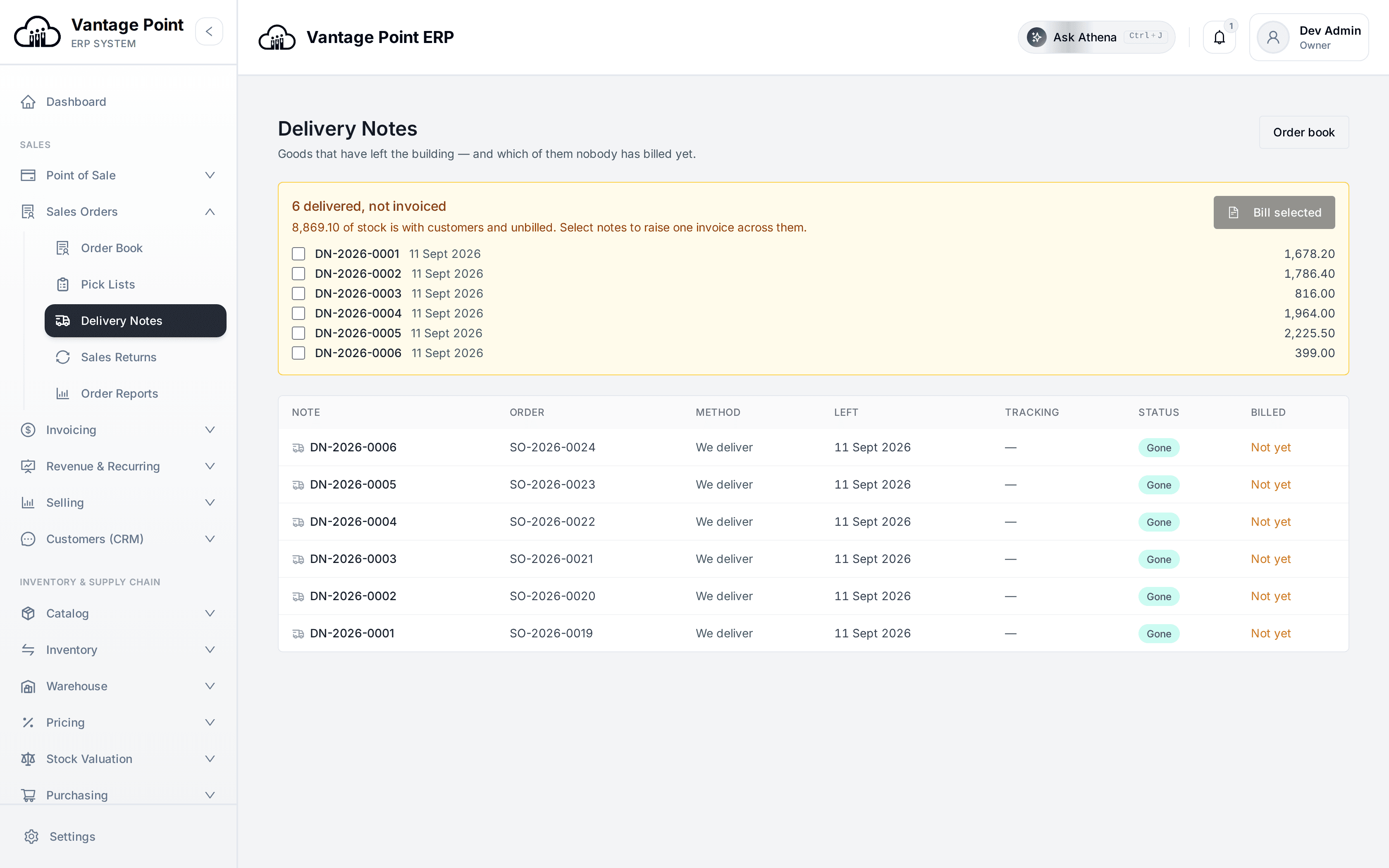
From there the order becomes work rather than paperwork. Confirmed orders sit in one order book showing what each is waiting on and what it still owes. Picking is generated in the order the warehouse actually walks, not the order the lines were typed. Dispatch produces the delivery note and moves the stock out of the ledger at the moment the goods physically leave, so the accounts and the yard agree without anyone reconciling them afterwards.
Partial deliveries are treated as normal, because they are. Ship what is available, leave the balance open, and short-close the lines that are never going to arrive so that the committed stock figure stays honest instead of quietly inflating. Returns come back against the original order at the cost the goods left on, with the credit note and the stock movement posted together — which is what keeps margin correct after a return rather than approximately correct.
An order is a promise. This is how you keep it.
Confirming an order commits the stock, so the same unit is never promised twice. What is still owed stays visible until it ships or is short-closed.
Sales Orders & Fulfilment, asked and answered.
What happens to stock when I confirm a sales order?
It is committed to that order. The units stay physically where they are but stop counting as free to sell, so a second customer cannot be promised the same goods. The commitment is released when the order ships or when the line is short-closed.
Can I deliver an order in more than one drop?
Yes. Ship whatever is available now and the balance stays open on the order. Each dispatch produces its own delivery note and its own stock movement, and the order shows what is still owed until it is complete.
How do I close off an order line that will never be supplied?
Short-close it. The outstanding quantity is cancelled and the stock commitment behind it is released, so the order book shows only work that is genuinely still expected rather than accumulating lines nobody intends to fill.
Are pick lists organised for the warehouse or for the order?
For the warehouse. Picking work is grouped the way the floor walks the building, so a picker moves through the aisles once rather than criss-crossing to follow the sequence the order happened to be typed in.
How are sales returns costed?
At the cost layer the goods originally left on, not at today's cost. That means a return does not silently create or destroy margin, and the credit note and the stock coming back are posted as one connected event.
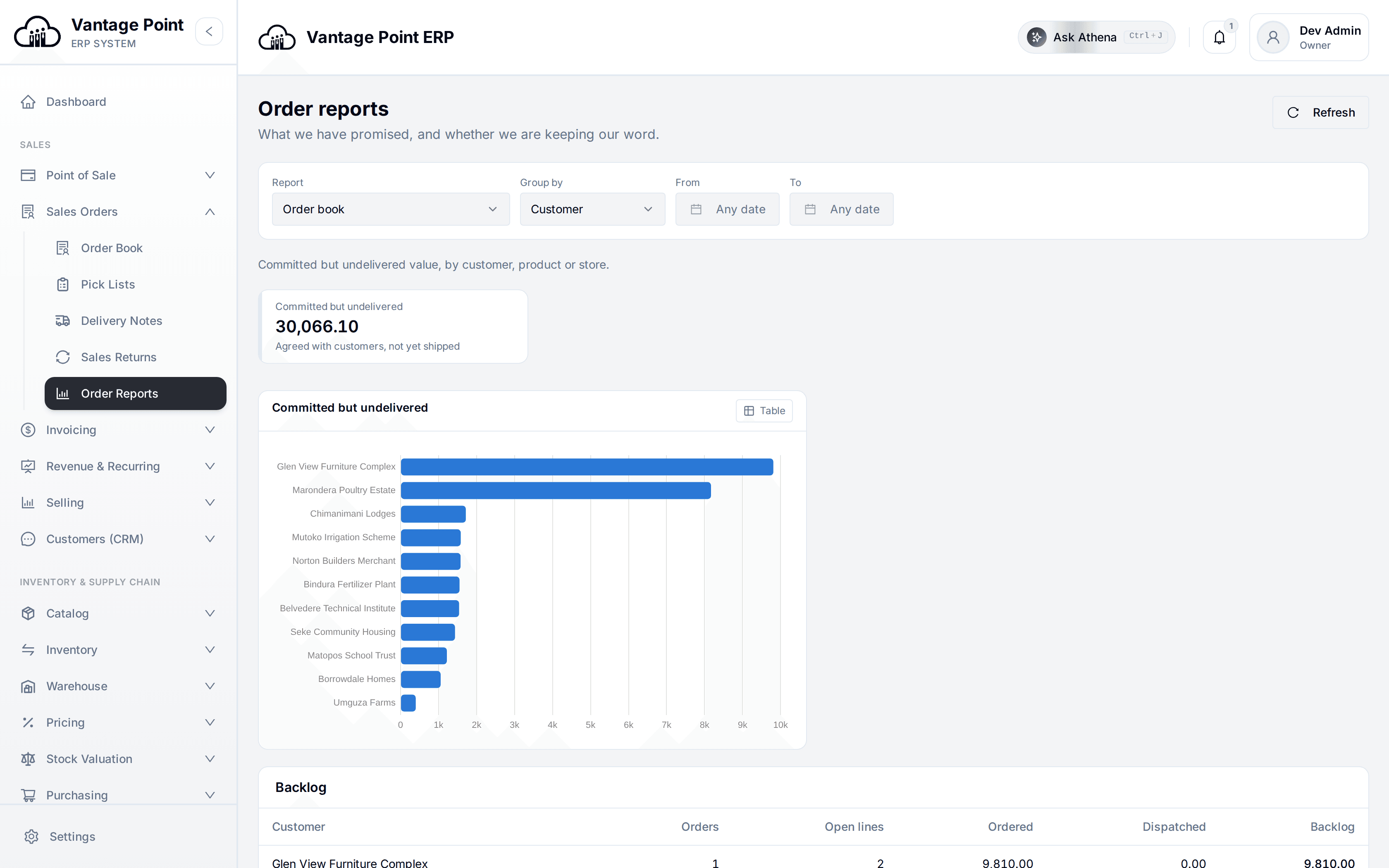
Can I see which orders are slipping before the customer complains?
Yes. Backlog, fill rate and ageing reports run over open commitments, so an order that has been sitting unfulfilled is visible as a number rather than as a phone call.
The rest of the system.
ONE LEDGER UNDERNEATH IT ALLTake the high ground.
Set up your first store, till and ledger in an afternoon.