Ask the business a question.
An assistant built into the system that answers from your own books — revenue by branch, who is over their credit limit, what is about to expire — and draws the chart to go with the answer.
An AI assistant that reads your own books, not the internet
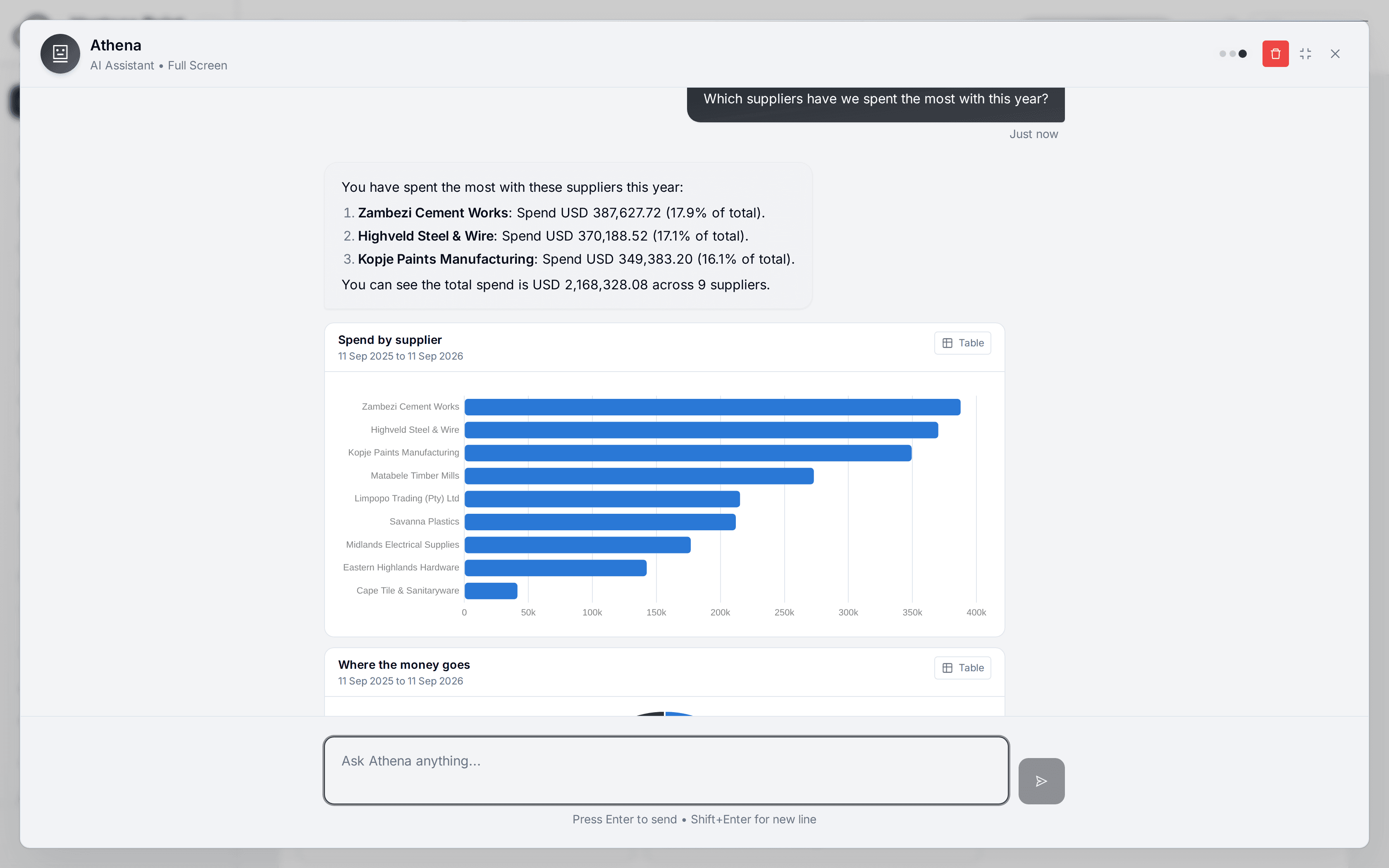
Most business software has added a chat box in the last two years, and most of those chat boxes answer from a general model that has never seen your data. Athena is the opposite arrangement. She is built into Vantage Point, and every figure she gives you is fetched from your own ledger at the moment you ask for it — so the answer to "what did Bulawayo take last week" is the same number the sales report would give you, because it comes from the same place.
The point is not novelty. It is that most of the questions a business owner has are simple to ask and tedious to answer: which customers are over their credit limit, what is sitting in stock that has not moved in ninety days, how gross margin this quarter compares with last. Each of those exists as a report, and each of those reports needs somebody to know where it lives and how to filter it. Typing the question is faster, and Athena draws the chart alongside the answer where a number is better seen than read.
She is deliberately read-only. Athena will not issue an invoice, move stock, pay a supplier or change a price — she reports on the business and never posts to it. Where an action follows from what she found, she proposes it and a person confirms it on a screen built for that. She also answers through your own permissions and your own branches, so a branch manager and a finance director asking the same question get different answers, and both are correct.
Not a chatbot bolted on. A reader of your ledger.
She answers from live data, through the same permissions you have, and she is read-only by design: she reports on the business, she never posts to it.
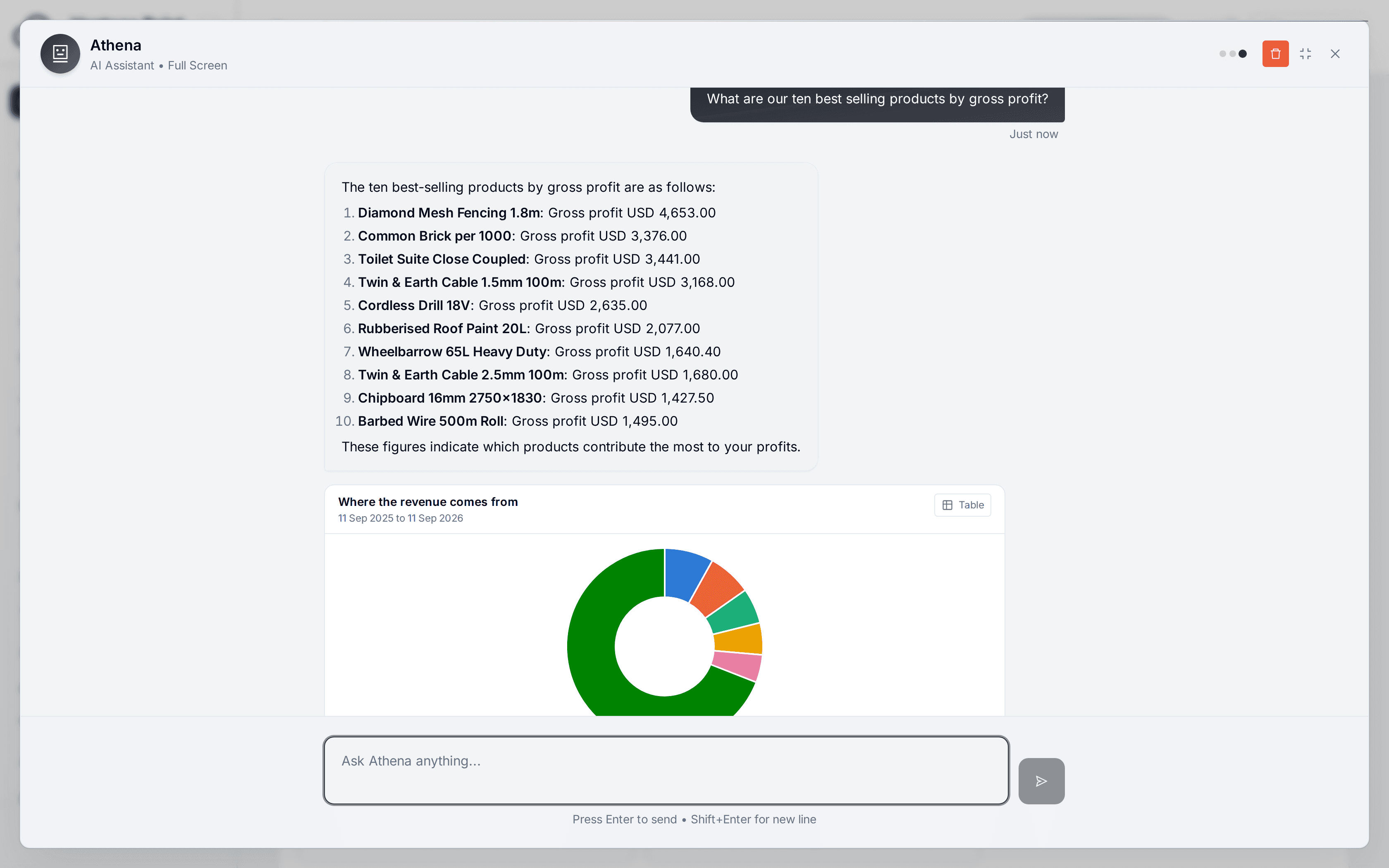
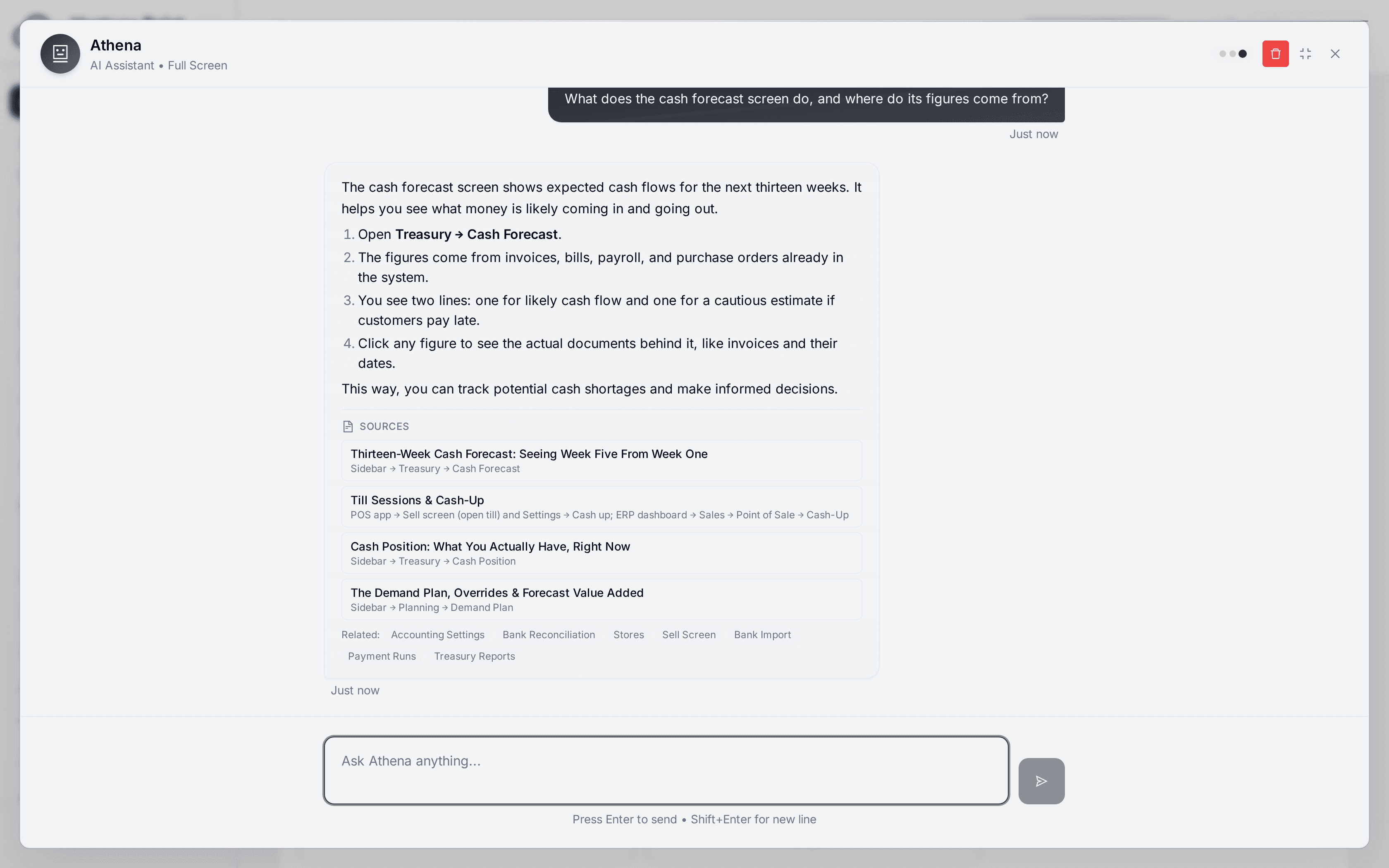
Athena, the assistant, asked and answered.
Does the AI assistant see my actual data?
Yes — that is the whole point of it. Athena queries your live Vantage Point ledger when you ask a question, through your own role and store permissions. She is not answering from a general-purpose model's training data, and she does not guess a figure she cannot find: if the data is not there, she says so.
Can the assistant change anything in the system?
No. Athena is read-only by design. She can report, summarise, compare periods and draw charts, but she cannot issue a document, post a journal, move stock or pay anybody. Where an action would follow from what she found, she proposes it and a person confirms it on the relevant screen, so there is always a human decision and an audit trail behind every change.
What sort of questions can I ask it?
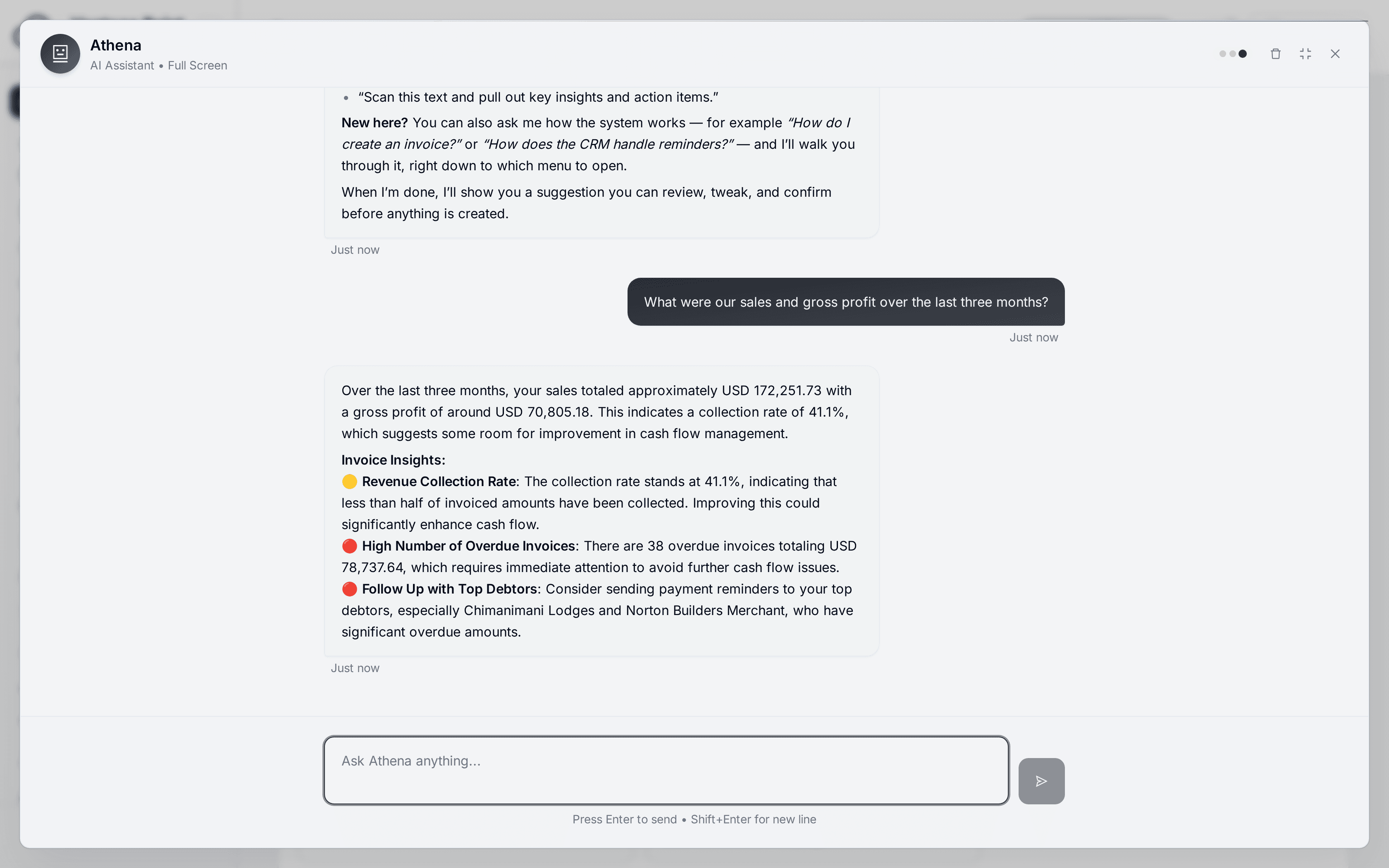
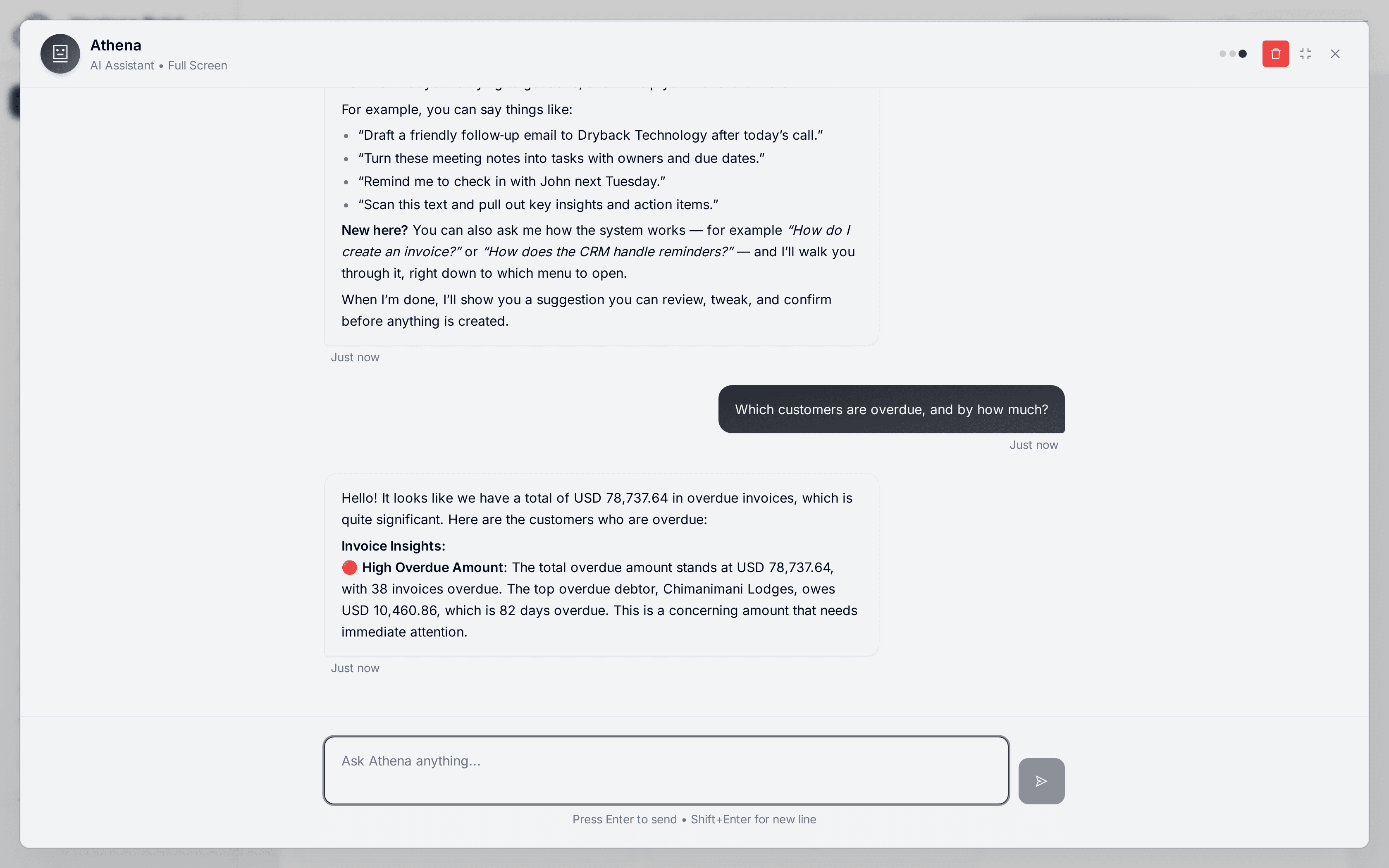
Anything the system already knows: revenue by branch or by product for a period you describe in words, which debtors are overdue and by how much, what stock is at risk of expiring, how this month's gross profit compares with last month, what a supplier has cost you this year. She will also produce the financial statements — trading account, income statement, balance sheet and cash flow — in the conversation, and she can answer questions about how the product itself works from the module manuals.
Do I need to know accounting to use it?
No. Athena is written for people who run a business rather than people who studied accounting: plain words, the working shown, and the jargon explained when it cannot be avoided. That is a deliberate design goal rather than a happy accident — the answers are tested for it.
The rest of the system.
ONE LEDGER UNDERNEATH IT ALLTake the high ground.
Set up your first store, till and ledger in an afternoon.