
Compliant while you trade.
A ZIMRA virtual fiscal device per branch, receipts submitted to FDMS in the background, and the VAT, corporate tax and statutory remittance workings reconciled against the ledger.
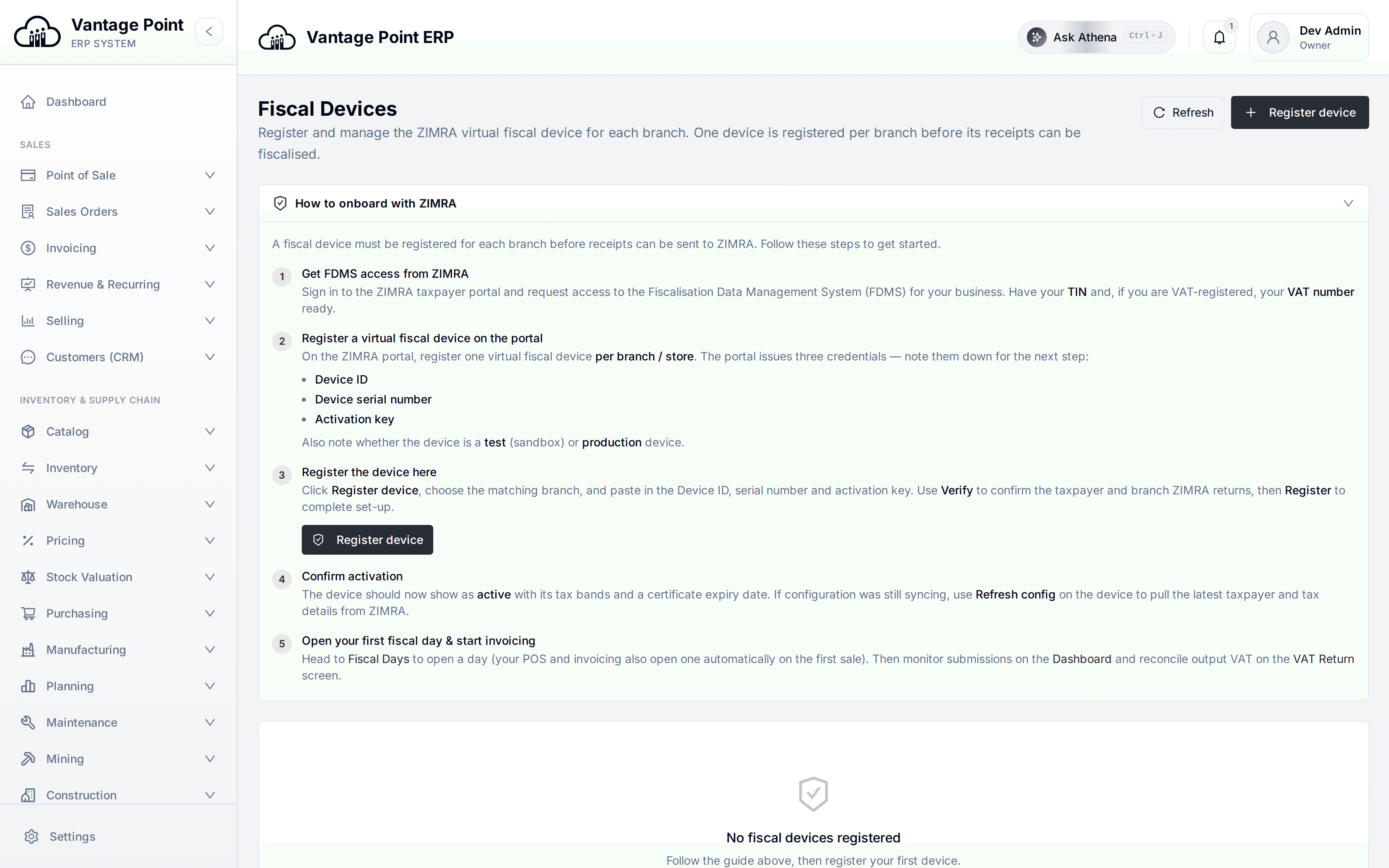
ZIMRA fiscalisation software: fiscal devices, FDMS and the VAT return
Fiscalisation is treated by most businesses as a chore performed after trading. Sales happen, and then somebody makes sure ZIMRA has been told about them. That ordering is the source of nearly every fiscalisation problem: batches that fail quietly, days that never closed, and a VAT return that does not agree with what was actually submitted. Vantage Point turns the ordering around. Fiscalisation is part of the sale, handled by the system at the moment the sale is made.
Each branch registers its own virtual fiscal device and verifies it against the ZIMRA taxpayer portal. From then on, every point-of-sale transaction and every fiscal invoice is signed, queued and submitted to the Fiscalisation Data Management System in the background. Fiscal days open on the first sale and close cleanly with a Z-report. Anything that fails appears on a submission dashboard immediately, while it is still a small problem, rather than being discovered during a return.
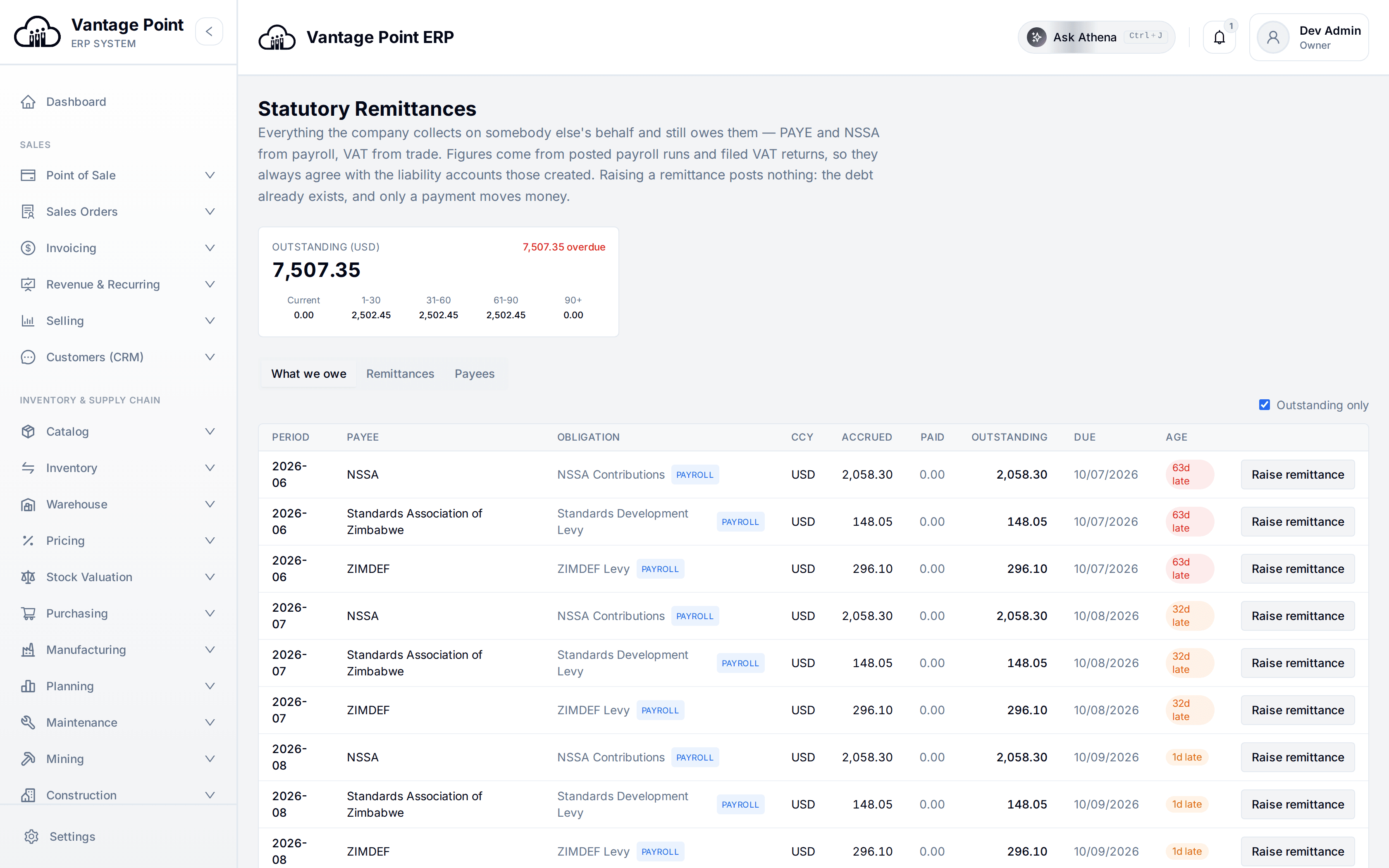
The tax workings are then drawn from the same ledger the trading created. The VAT return is built on the invoice basis with output tax broken out by currency and tax band, and reconciled three ways — what was fiscalised, what is in the ledger, and what is being declared — so a difference is found by you rather than by an auditor. Corporate tax quarterly payment dates and the ITF12C computation are worked from ledger figures, and payroll statutory liabilities are derived from posted payroll runs and cleared when they are paid.
Fiscalisation that is part of the sale, not a chore after it.
The device, the fiscal day and the submission queue are all handled by the system. What you see is what still needs a human — and usually that is nothing.
Tax & ZIMRA Compliance, asked and answered.
What is a virtual fiscal device?
It is a software fiscal device registered with ZIMRA in place of a physical fiscal printer. Vantage Point registers one per branch and verifies it against the ZIMRA taxpayer portal, after which that branch's sales can be fiscalised without separate hardware.
How are receipts sent to the ZIMRA FDMS?
Automatically and in the background. Each sale and fiscal invoice is signed and queued for submission to the Fiscalisation Data Management System as it is made. A dashboard shows the queue and surfaces any submission that failed so it can be dealt with straight away.
What happens if a submission to ZIMRA fails?
It stays in the queue and appears on the submission dashboard as a failure rather than disappearing. The point is that a problem is visible on the day it happens, when it involves a handful of receipts, instead of at the end of a period when it involves thousands.
Does it produce the VAT return?
Yes. Output tax is calculated on the invoice basis and broken out by currency and tax band, and the return is reconciled against both what was actually fiscalised and what is in the general ledger before it is declared.
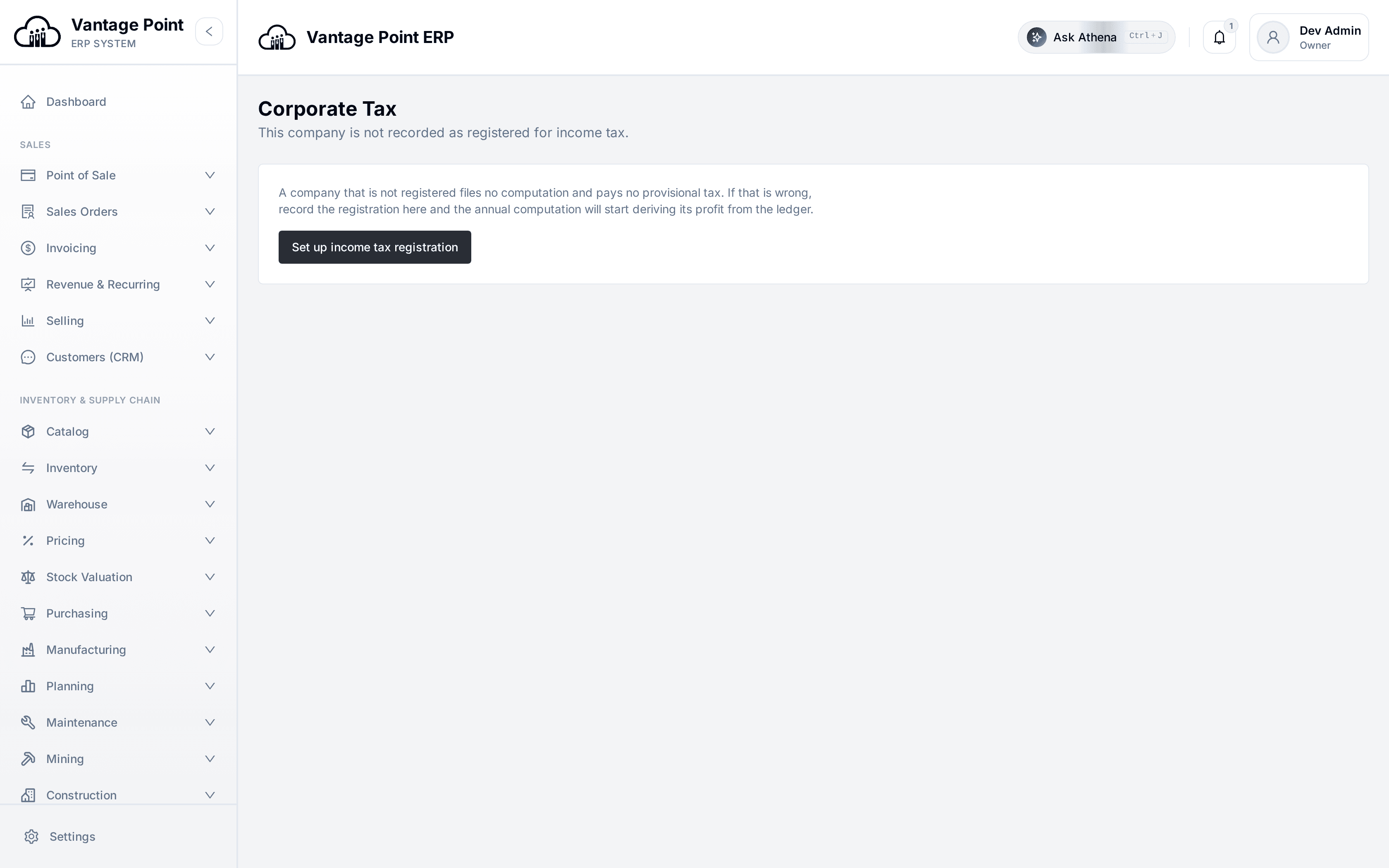
Does it handle corporate tax and quarterly payment dates?
Yes. Quarterly payment date obligations and the ITF12C computation are worked from ledger figures rather than from a separate spreadsheet, so the computation traces back to the transactions behind it.
Can a business customer get a receipt they can claim against?
Yes. The buyer's tax identification number can be captured at the till and appears on the fiscal receipt, which is what allows a business customer to claim the input tax on the purchase.
The rest of the system.
ONE LEDGER UNDERNEATH IT ALLTake the high ground.
Set up your first store, till and ledger in an afternoon.