
Every vehicle, every load, every litre.
Dispatch and trips, fuel and tyres, crews and compliance papers, cost per kilometre and live tracking — for hauliers, distributors, passenger operators and anybody running vehicles as part of the business.
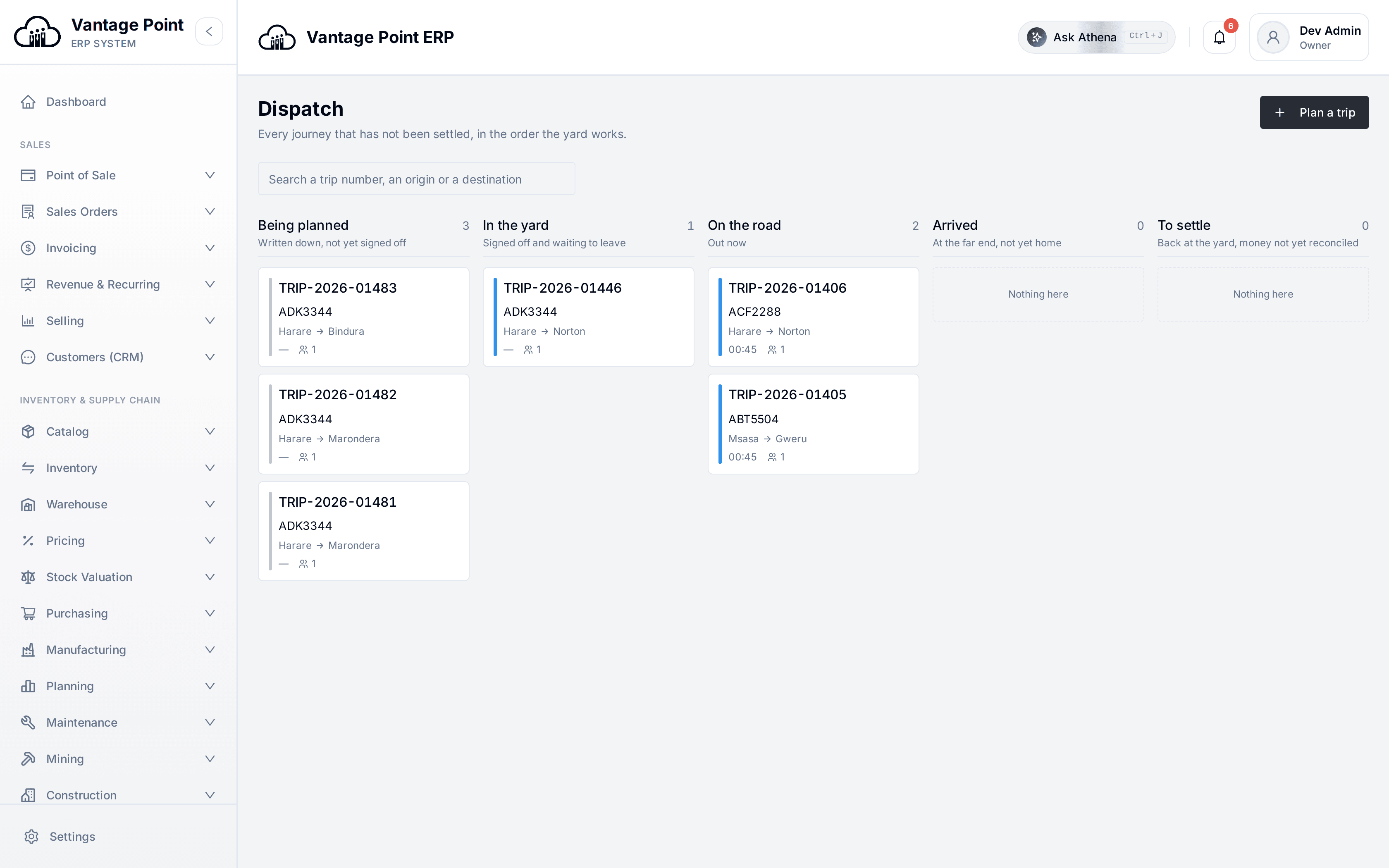
Fleet management for hauliers, distributors and anybody running vehicles
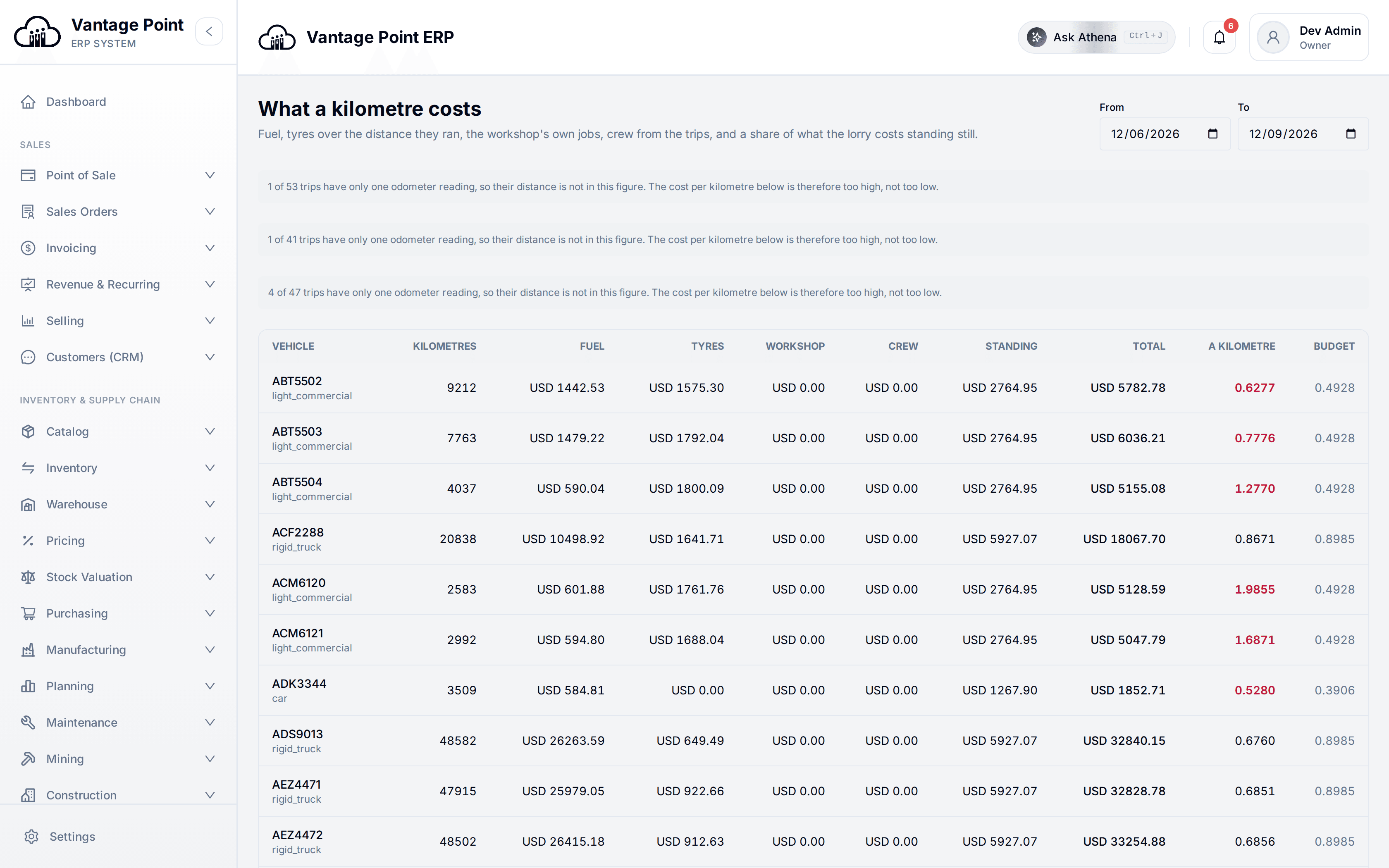
A vehicle is three things at once: an asset with papers that expire, a cost centre that consumes fuel and tyres, and the means by which revenue is earned. Most fleet systems handle one of those and leave the other two to a spreadsheet. Vantage Point's fleet module handles all three in the same records, so the cost per kilometre it reports is built from the fuel, tyres, maintenance, crew and fixed costs the ledger actually holds — which is the figure a rate quoted to a customer ought to be built on.
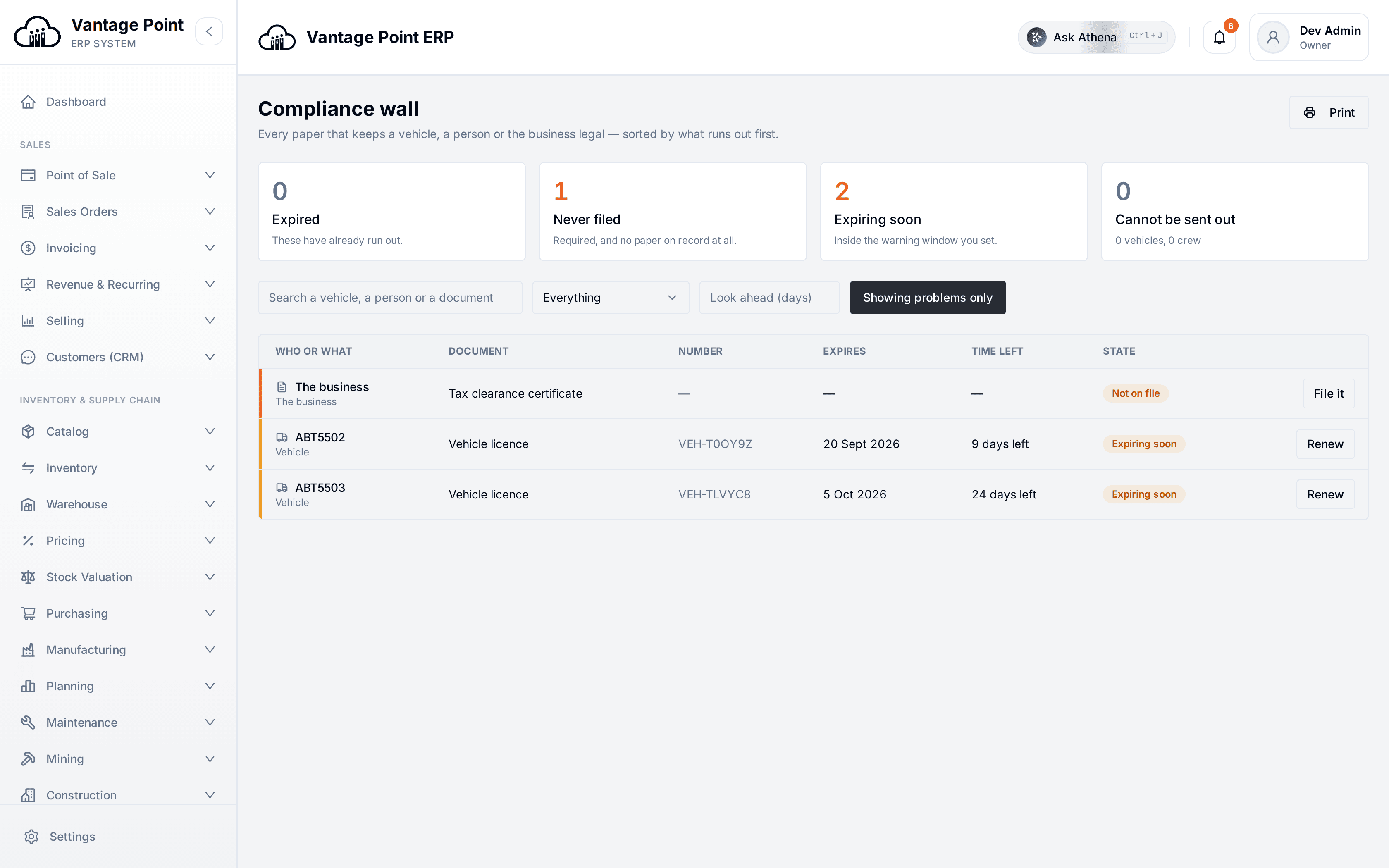
Day to day the module runs on trips. A trip is planned, authorised, loaded, run against checkpoints and closed out, carrying what was collected on it and what was spent on it along the way. Around that sit the things that stop a lorry leaving the yard: a compliance wall showing which licence, fitness certificate or insurance is next to expire, walk-round checks with their own checklists, and a duty roster saying who is crewing what.
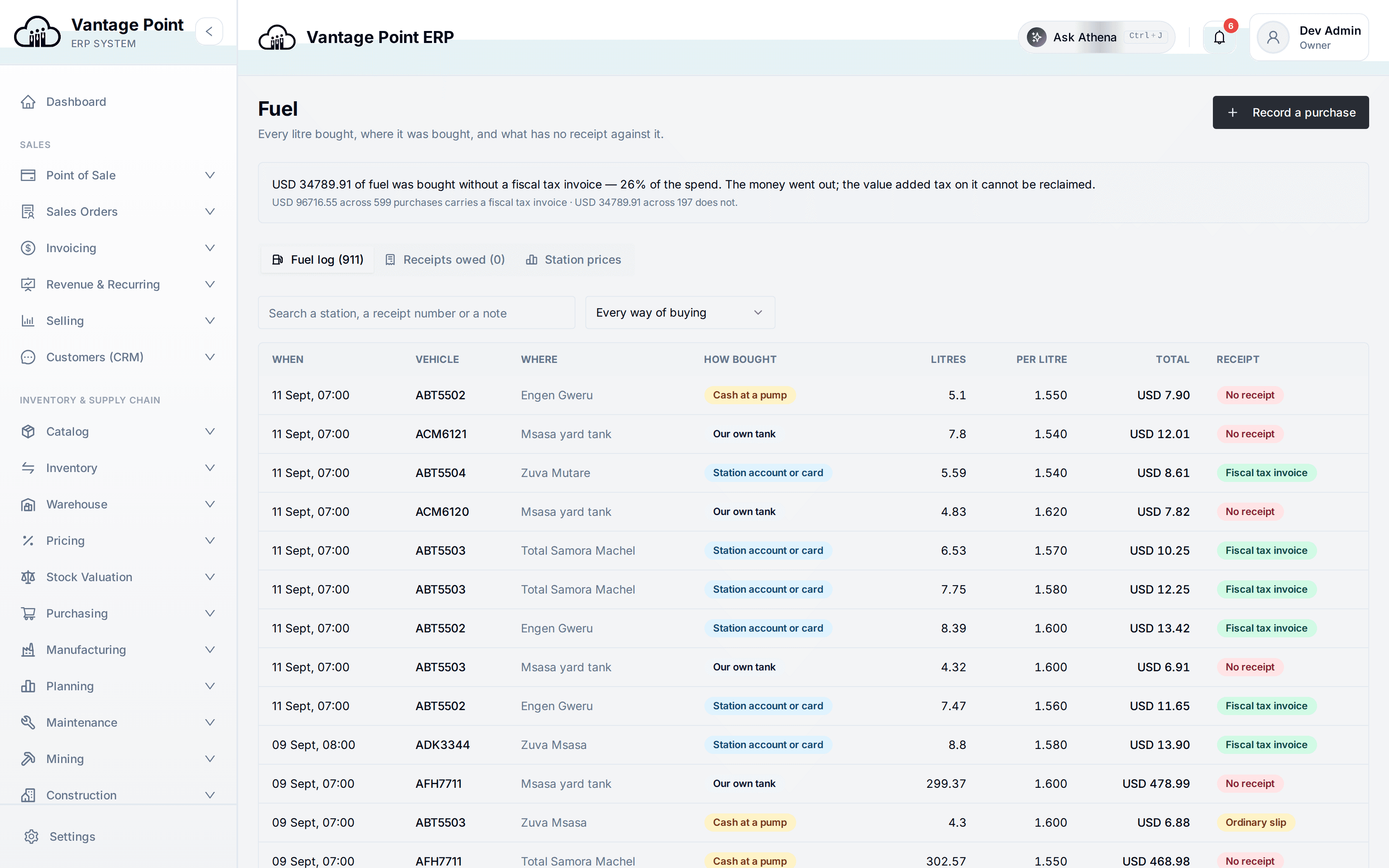
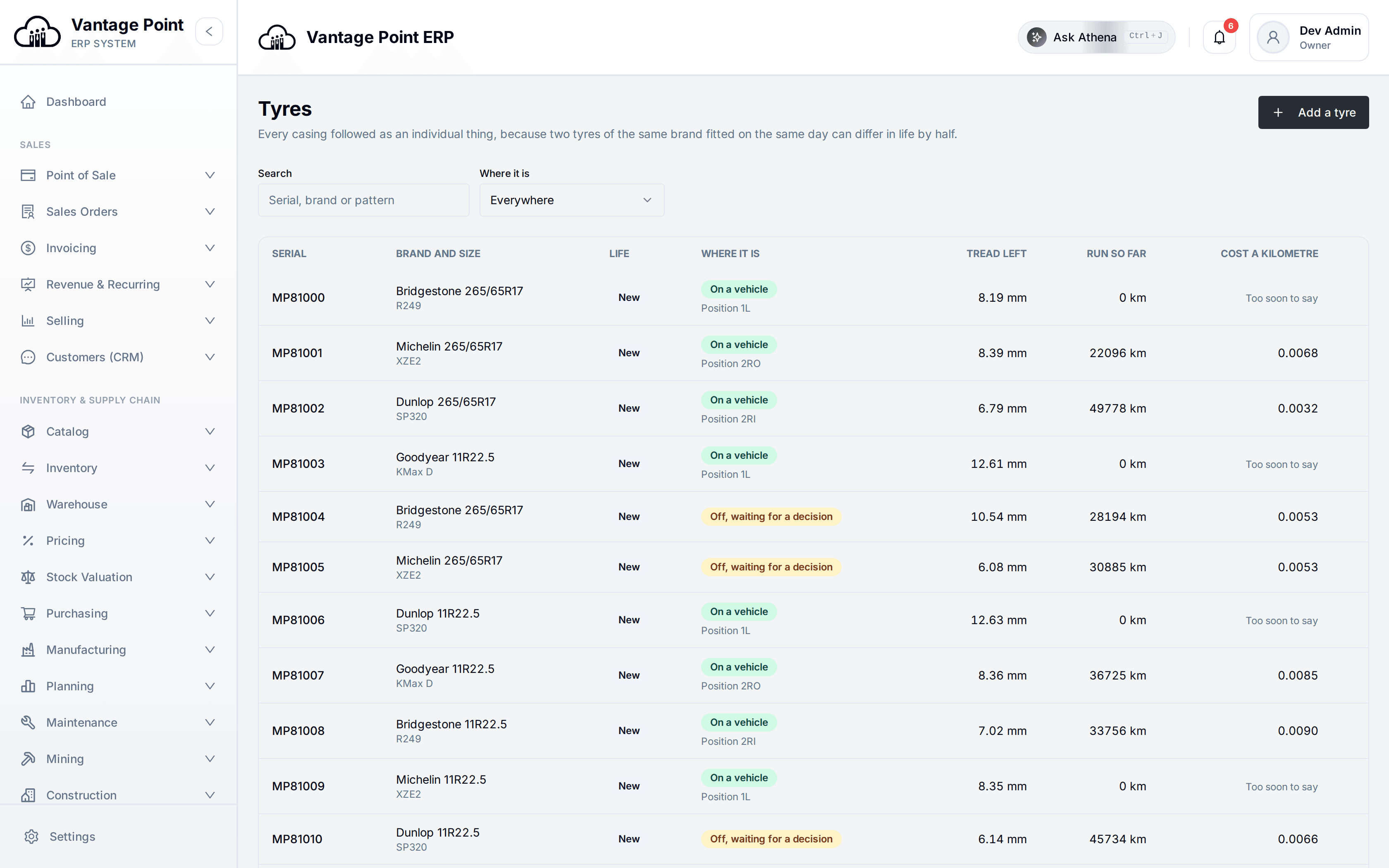
Fuel is where money quietly leaves a fleet, so it is treated carefully. Draws from a fuel card or from your own tank are reconciled against the supplier's statement, and litres that do not add up are raised as a case for someone to answer rather than absorbed into an average. Tyres are tracked by casing through fitment, rotation and retread with a cost-per-kilometre league across the fleet. For operators who sell seats rather than space, departures, routes, ticket batches and daily hand-ins are all there too.
A lorry is an asset, a cost centre and a legal obligation at once.
Fleet treats it as all three: what it earns on a trip, what it costs per kilometre, and whether its papers are in date before it is allowed out of the yard.
Fleet & Transport, asked and answered.
Does it work out cost per kilometre?
Yes, per vehicle, from fuel, tyres, maintenance, crew and fixed costs drawn from the ledger, against rate cards you define. That makes it the figure to quote from rather than an estimate — and it is reported alongside what each trip actually earned.
Can it track fuel theft?
It reconciles every fuel draw against the card or tank it came from and against the supplier's statement, and raises the differences that do not reconcile as fuel cases for someone to explain. It will not accuse anybody, but it makes the litres that cannot be accounted for visible instead of averaging them away.
Does it handle passenger transport as well as freight?
Yes. Alongside consignments, drops and cash collected on delivery, there are departures, routes and stages, seat and ticket batches, ticket providers and daily hand-ins from conductors — with the fiscal receipt handled for ticket sales where that applies.
Will it tell me when a licence is about to expire?
Yes. Every vehicle carries its documents with expiry dates, and the compliance wall shows what is expiring next across the fleet. Driver competencies and inspections are held the same way, on the person rather than on the vehicle.
The rest of the system.
ONE LEDGER UNDERNEATH IT ALLTake the high ground.
Set up your first store, till and ledger in an afternoon.