From a lead to a signature.
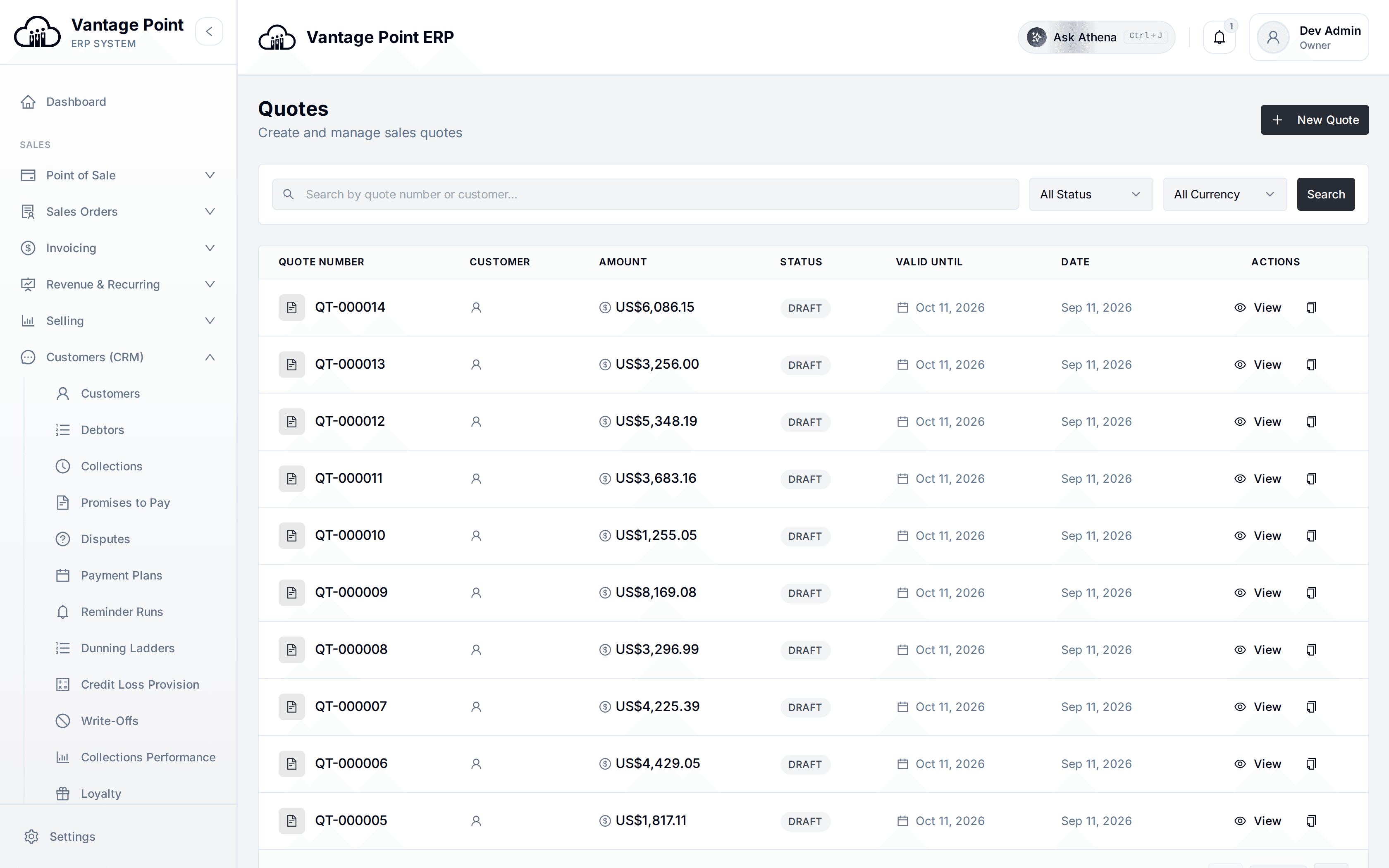
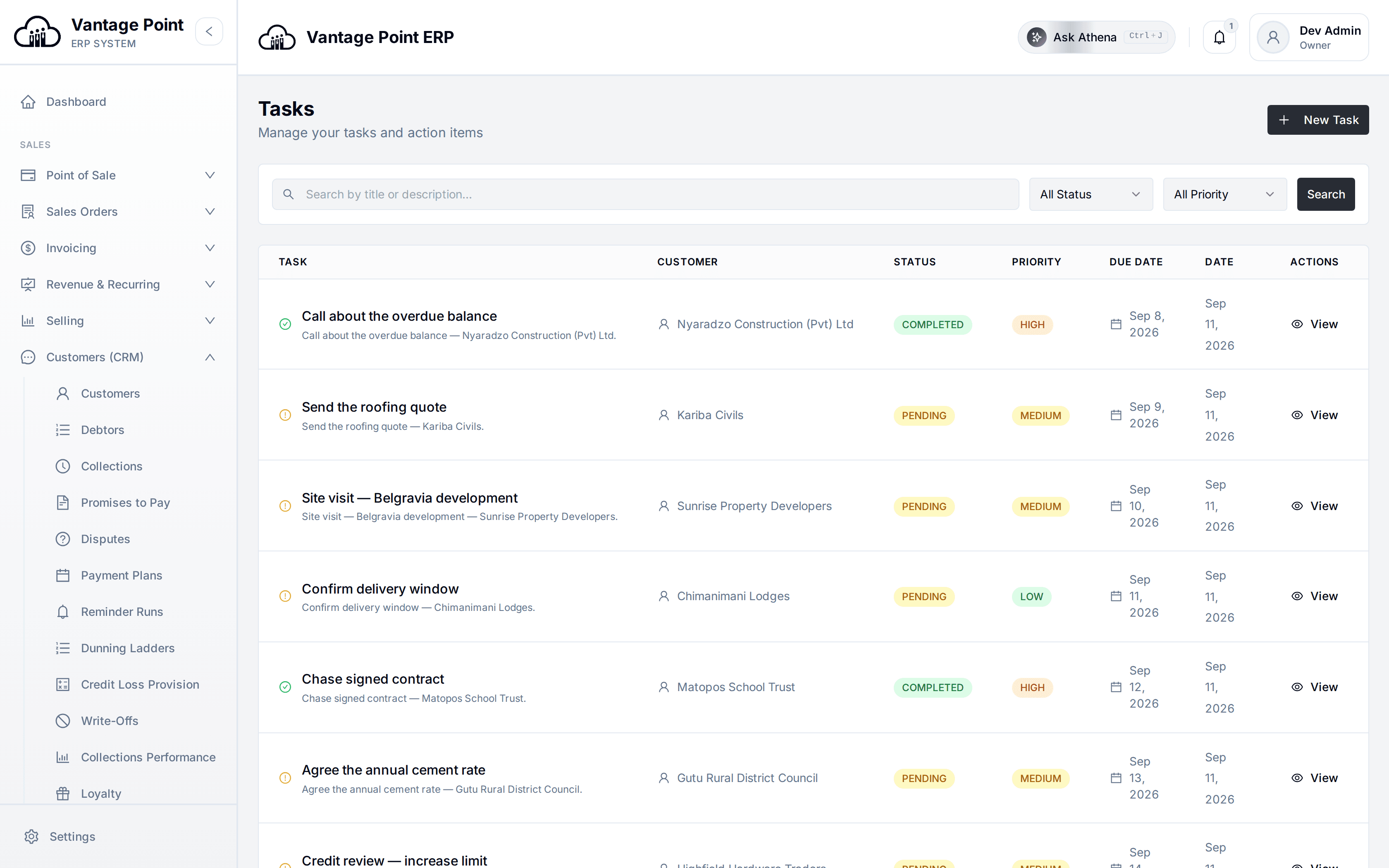
Leads, opportunities, forecast, quotas and commission on the selling side; customers, contracts, tasks and collections on the account side. Both sides share one customer record.
CRM and sales pipeline software that sits on your ledger
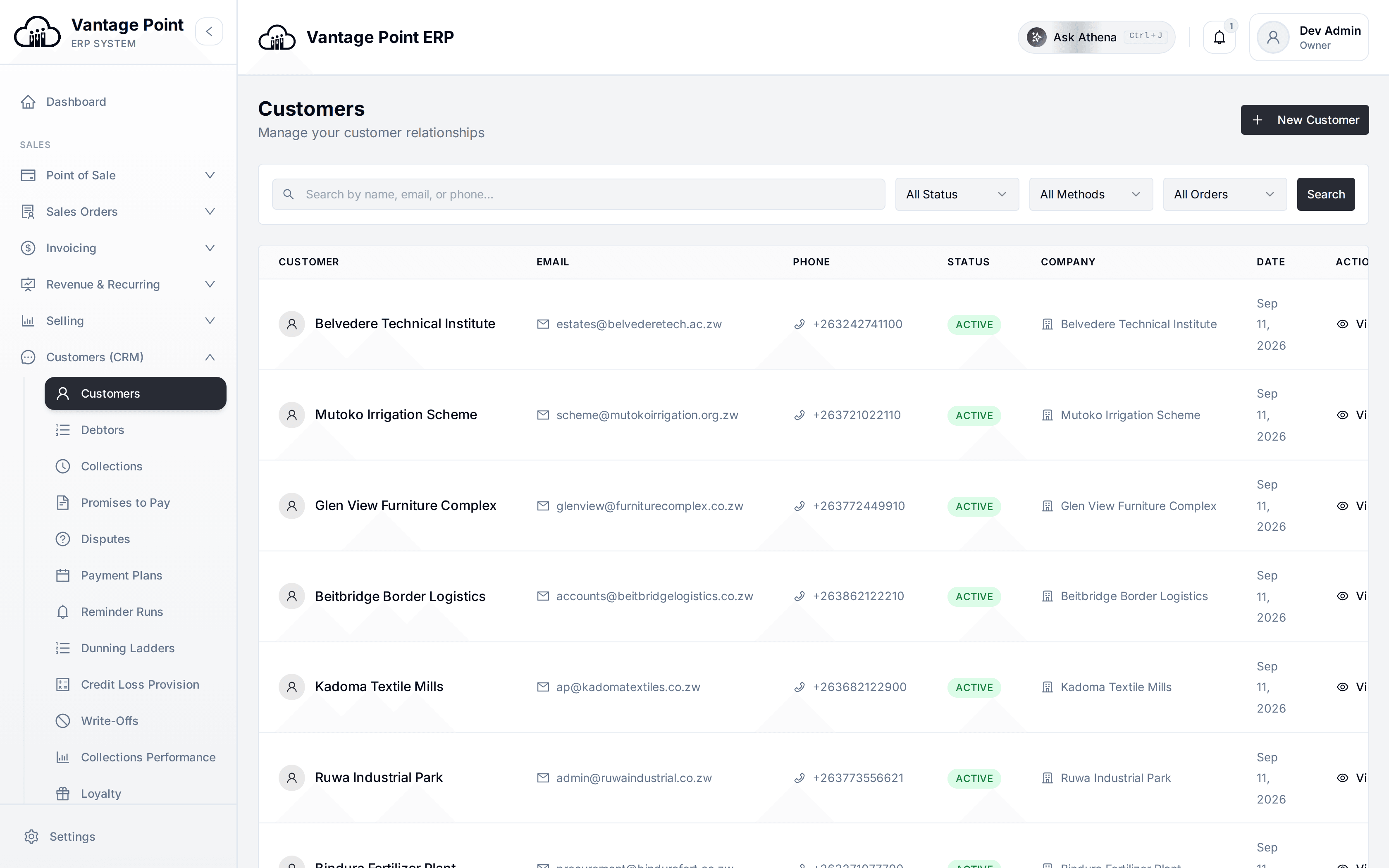
A standalone CRM eventually tells you a different story from your accounts. The sales system says a customer is a great prospect; the accounting system says they are ninety days overdue. Both are looking at the same company and neither knows it. In Vantage Point the customer record used by the sales team is the same record that carries the credit limit, the outstanding balance and the payment history, so those two stories cannot diverge.
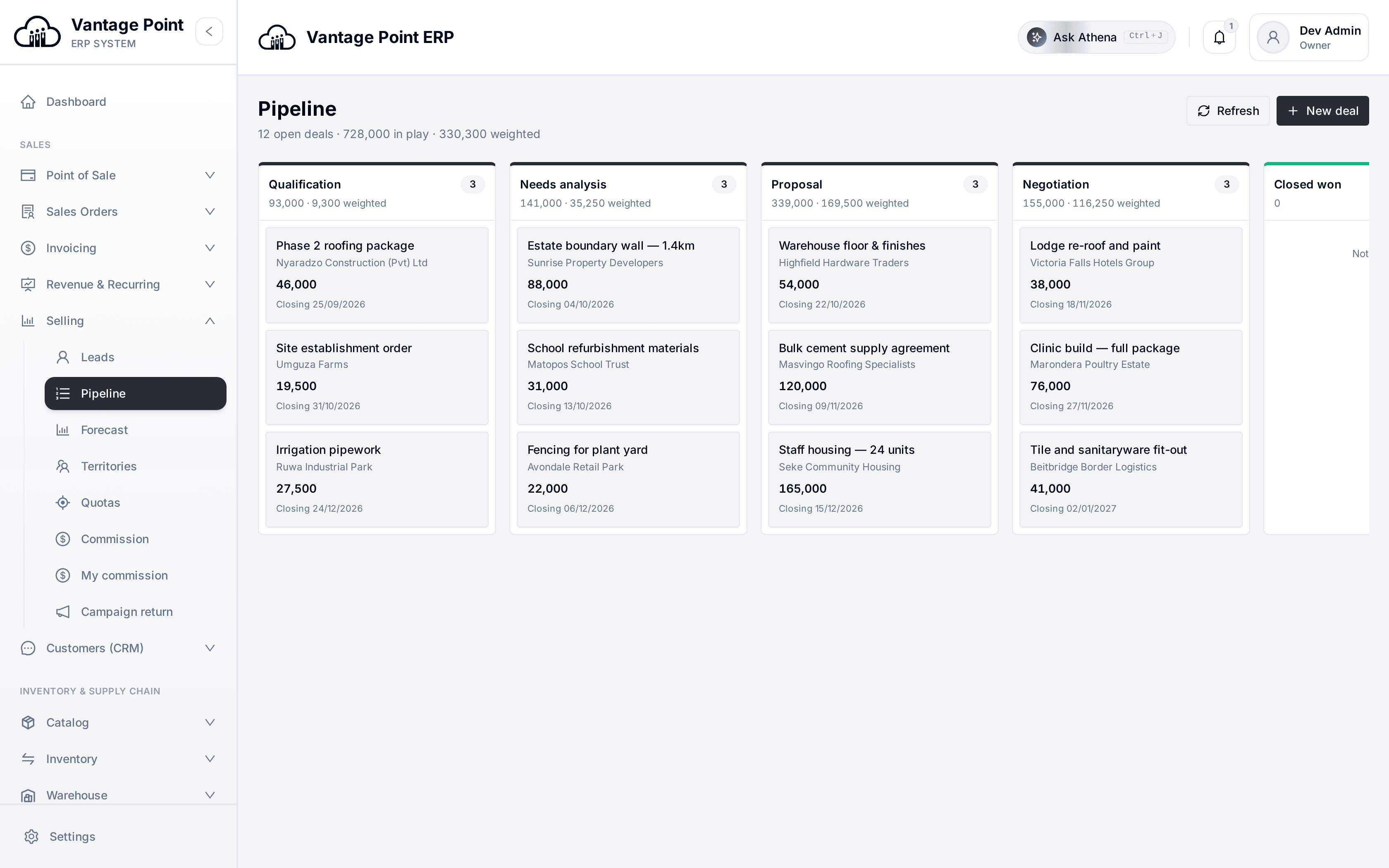
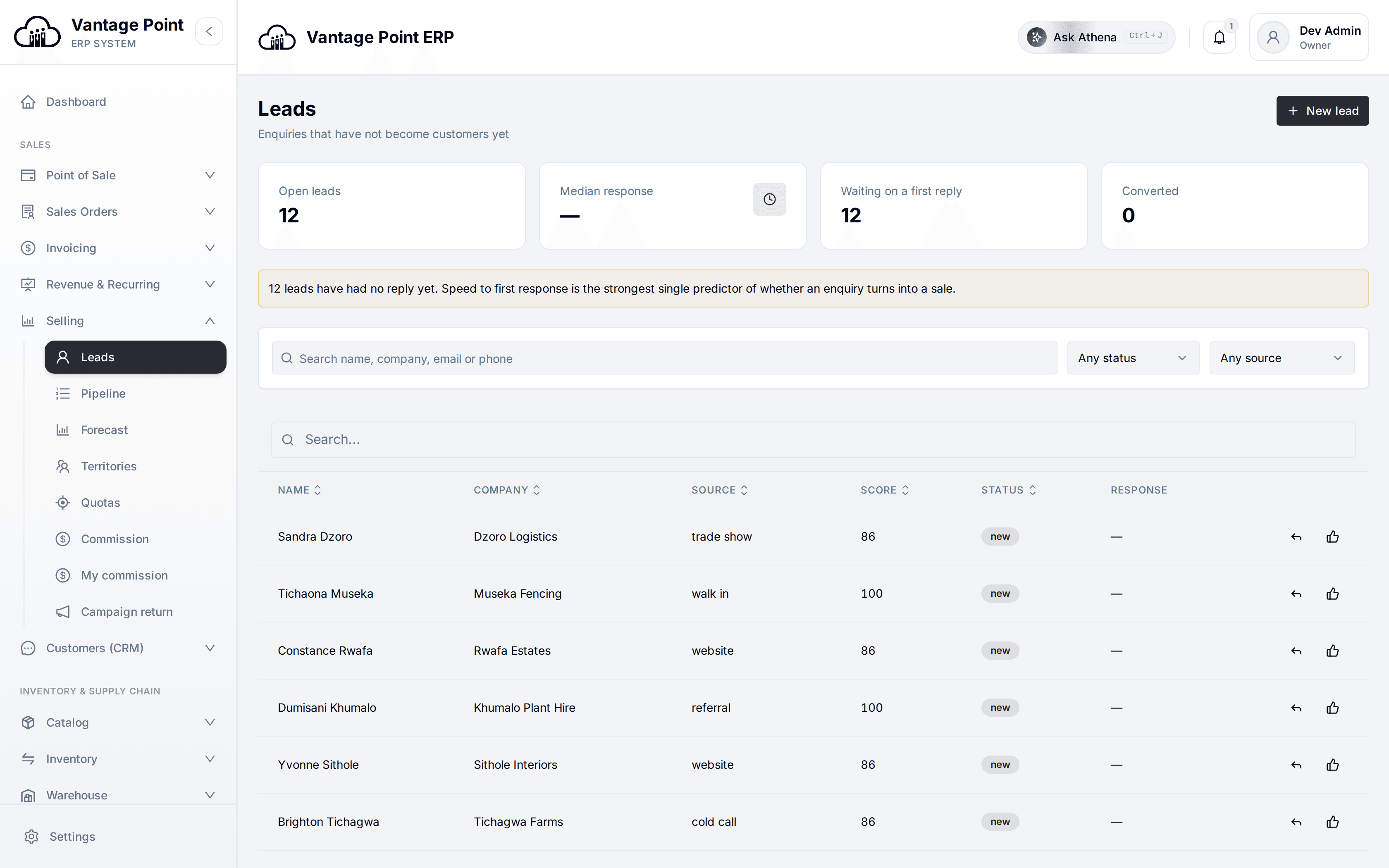
On the selling side that gives you leads, opportunities moving through stages you define, a weighted forecast, quotas per representative and per period, and territories that decide whose number a deal counts towards. Commission is computed from what was actually invoiced and paid rather than from what was claimed, and each representative can check their own statement without asking anyone. A won deal converts into a branded quote and then into an invoice without the figures being typed a second time.
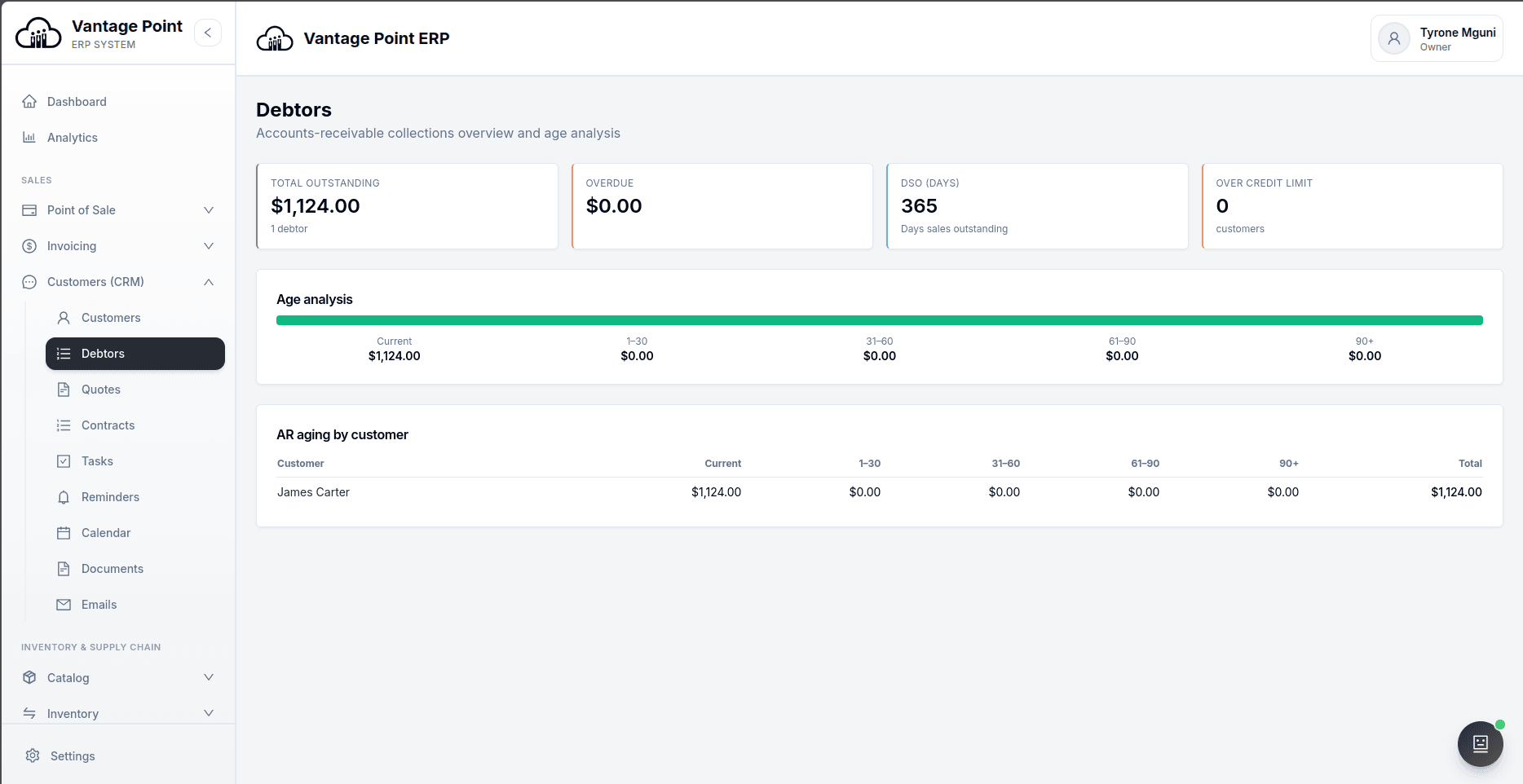
On the account side the same record carries contracts and their price schedules, which invoices genuinely price through — so a customer on an agreed rate gets that rate whether or not the person raising the invoice remembers the agreement. Credit limits are enforced at the till and on the invoice screen before the sale rather than after it. Debtor ageing, days sales outstanding, statements and automated reminders over email or WhatsApp all read from the same place.
The pipeline and the people, in the same system as the money.
Because your CRM sits on the ledger, a rep's forecast, a customer's credit limit and a debtor's age analysis are all the same customer, not three exports.
CRM & Sales Pipeline, asked and answered.
How is this different from a standalone CRM?
The customer in the pipeline and the customer in the accounts are one record. A representative sees the live outstanding balance and credit limit next to the opportunity, and finance sees the pipeline behind the forecast, with no exporting or matching between two systems.
Can it enforce a customer's credit limit at the point of sale?
Yes. Credit limits and payment terms are checked by the till and by the invoice screen before the sale is completed, so an over-limit account is flagged while something can still be done about it.
How is sales commission calculated?
From what was actually invoiced and paid, not from what was recorded as won. Each representative has a self-service statement showing the deals behind their number, which removes most of the monthly argument about commission.
Do agreed contract prices apply automatically on invoices?
Yes. A client contract carries a price schedule and invoice lines are priced through it, so the agreed rate is applied without anyone remembering it. A leakage report shows any invoice that was raised outside the agreed price.
Can I chase overdue customers automatically?
Yes. Debtor ageing drives reminders that can be sent by email or over WhatsApp on a schedule you set, and statements can be delivered the same way rather than exported and attached by hand.
Can I tell which marketing brought in actual revenue?
Yes. Attribution runs from the campaign through to the revenue it produced rather than stopping at the leads it produced, so spend is judged on money rather than on enquiries.
The rest of the system.
ONE LEDGER UNDERNEATH IT ALLTake the high ground.
Set up your first store, till and ledger in an afternoon.