What it cost to make it.
Production orders, work centres, bills of material and standard costing — with WIP, by-products, rework and a variance engine that says where the money actually went.
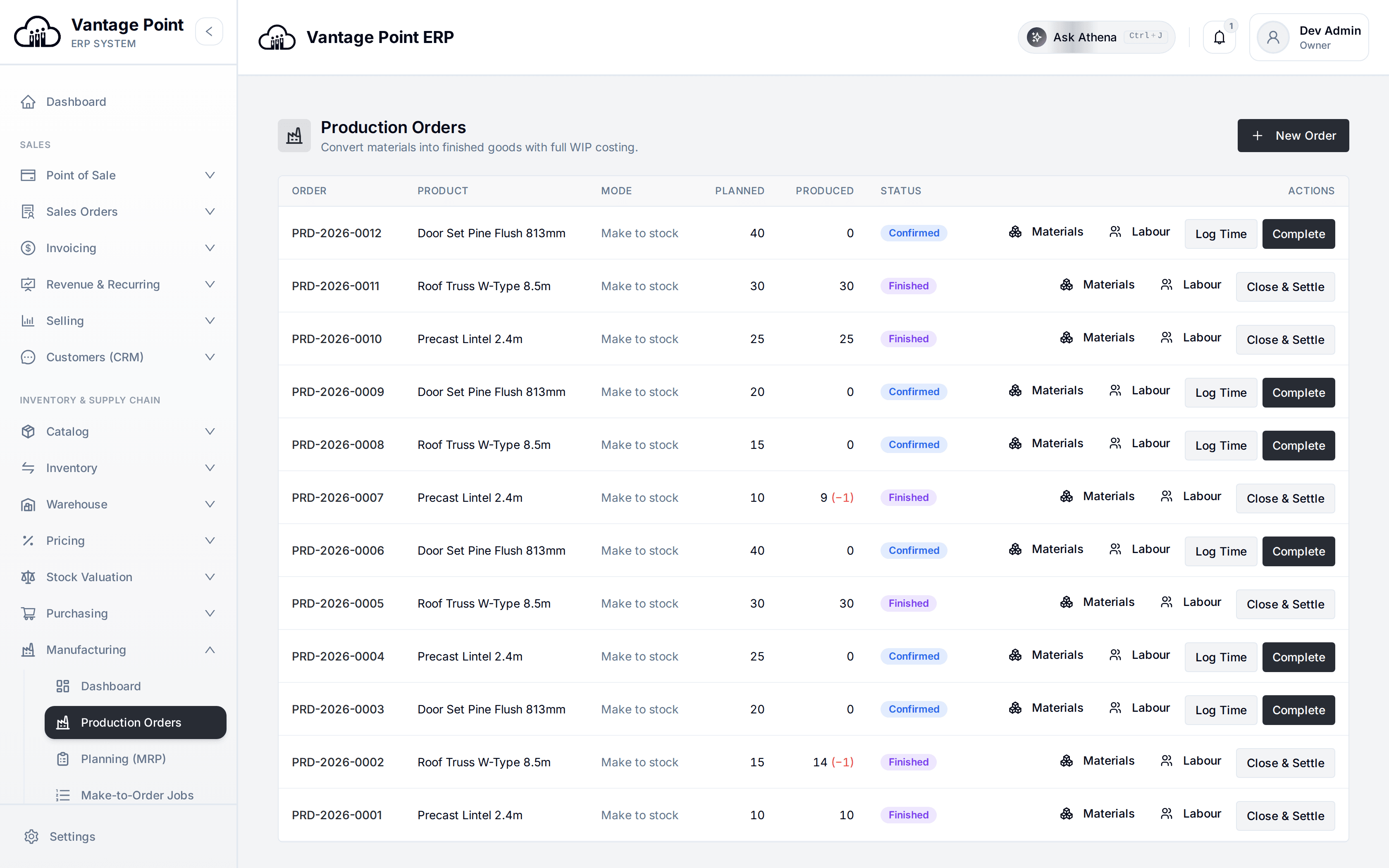
Manufacturing software that tells you what a product actually cost
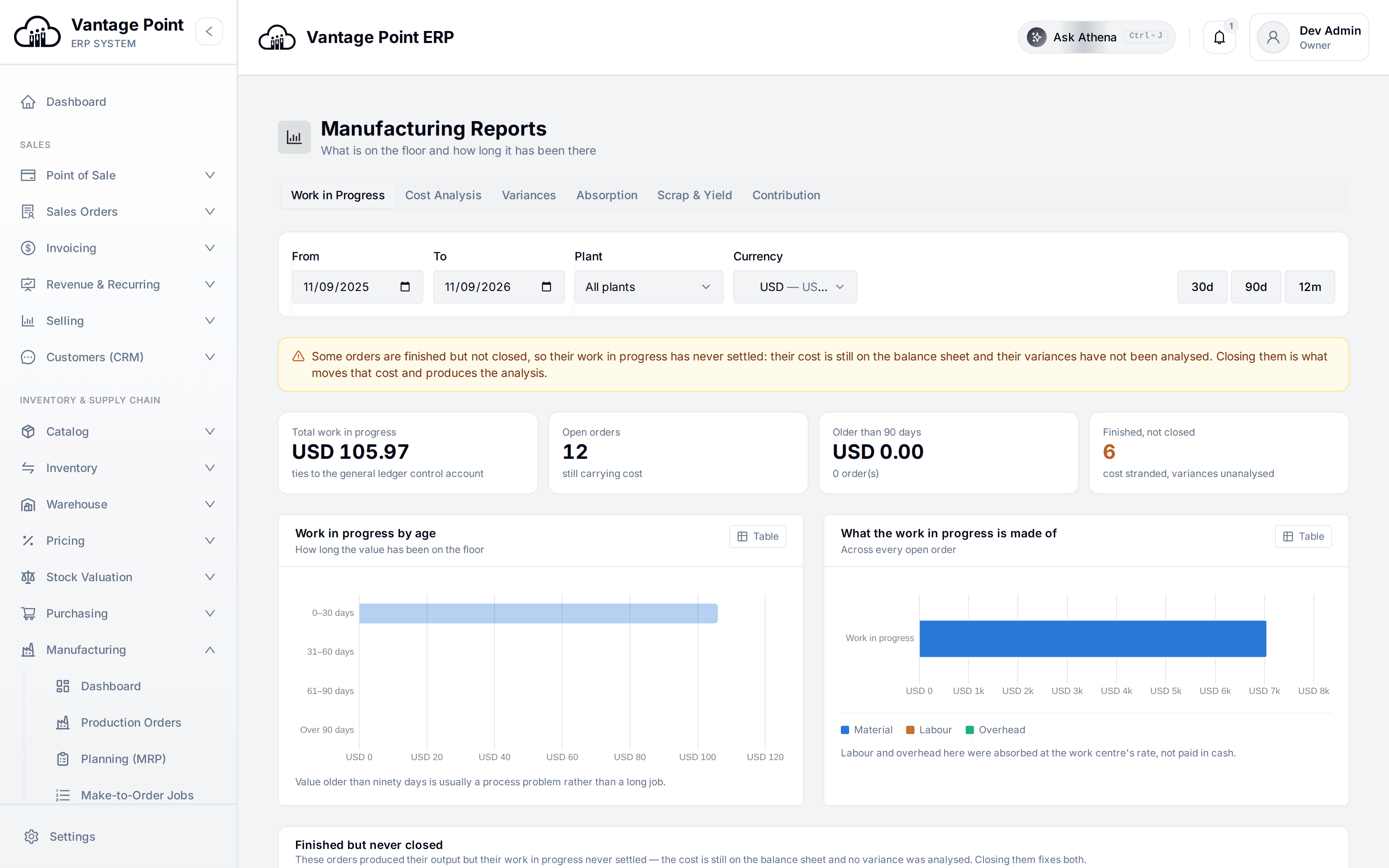
Most small manufacturers know their selling price precisely and their cost approximately. Materials are tracked, labour is estimated, overhead is a percentage somebody chose years ago, and the true cost of a batch is only ever inferred from whether the bank balance went up. Vantage Point makes production cost a measured figure: materials issued, labour applied and overhead absorbed are all real postings to the general ledger, and work in progress is a balance you can look at rather than a gap between two other numbers.
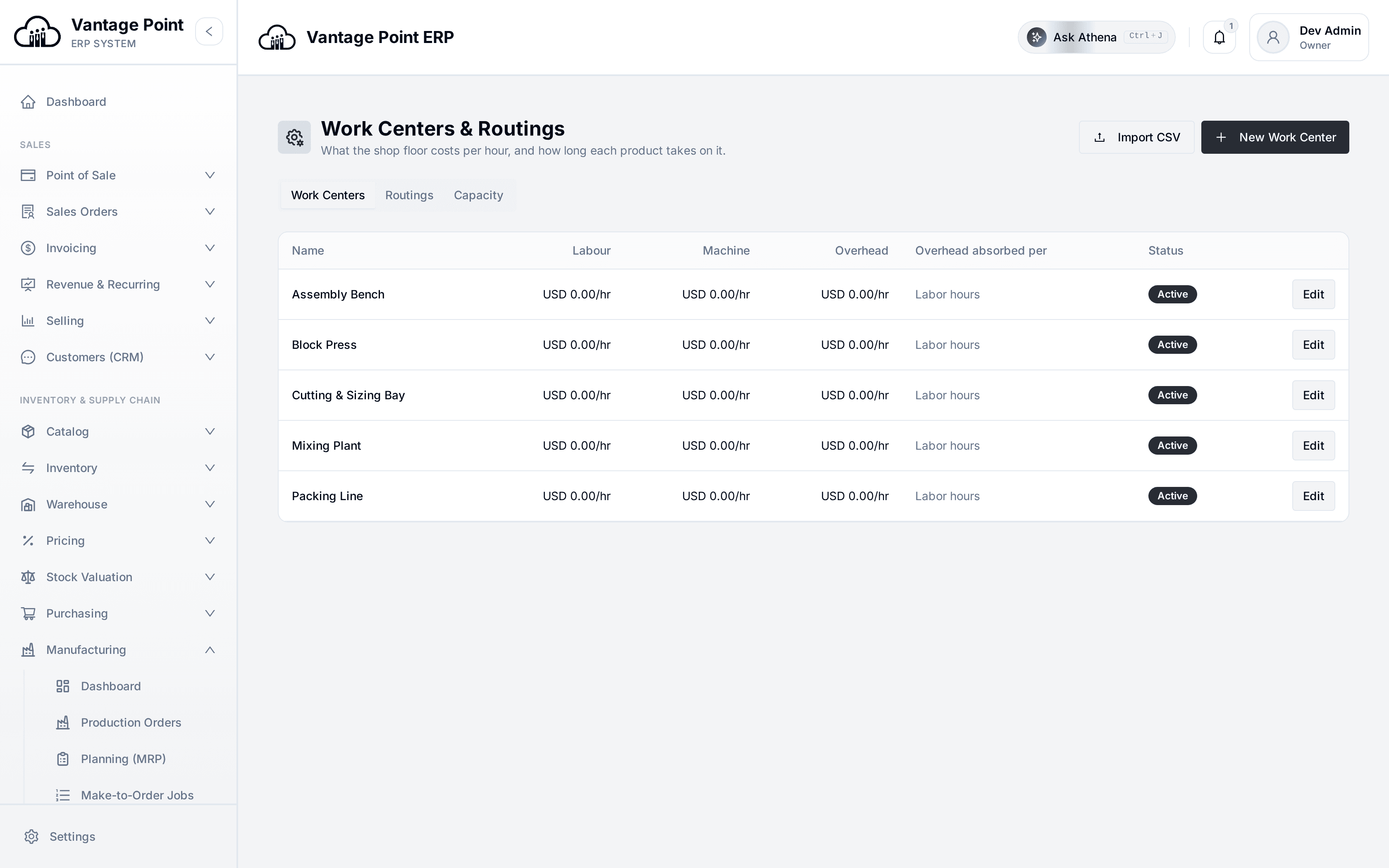
A production order draws on a bill of material for what goes in and a routing for the operations it passes through. Routings name real job titles and crew sizes, and elapsed time is kept in a separate column from labour hours — because four people working for two hours is eight labour hours and two hours of the machine, and treating those as one number is how factory costing quietly goes wrong. Work centre capacity is planned against the same figures.
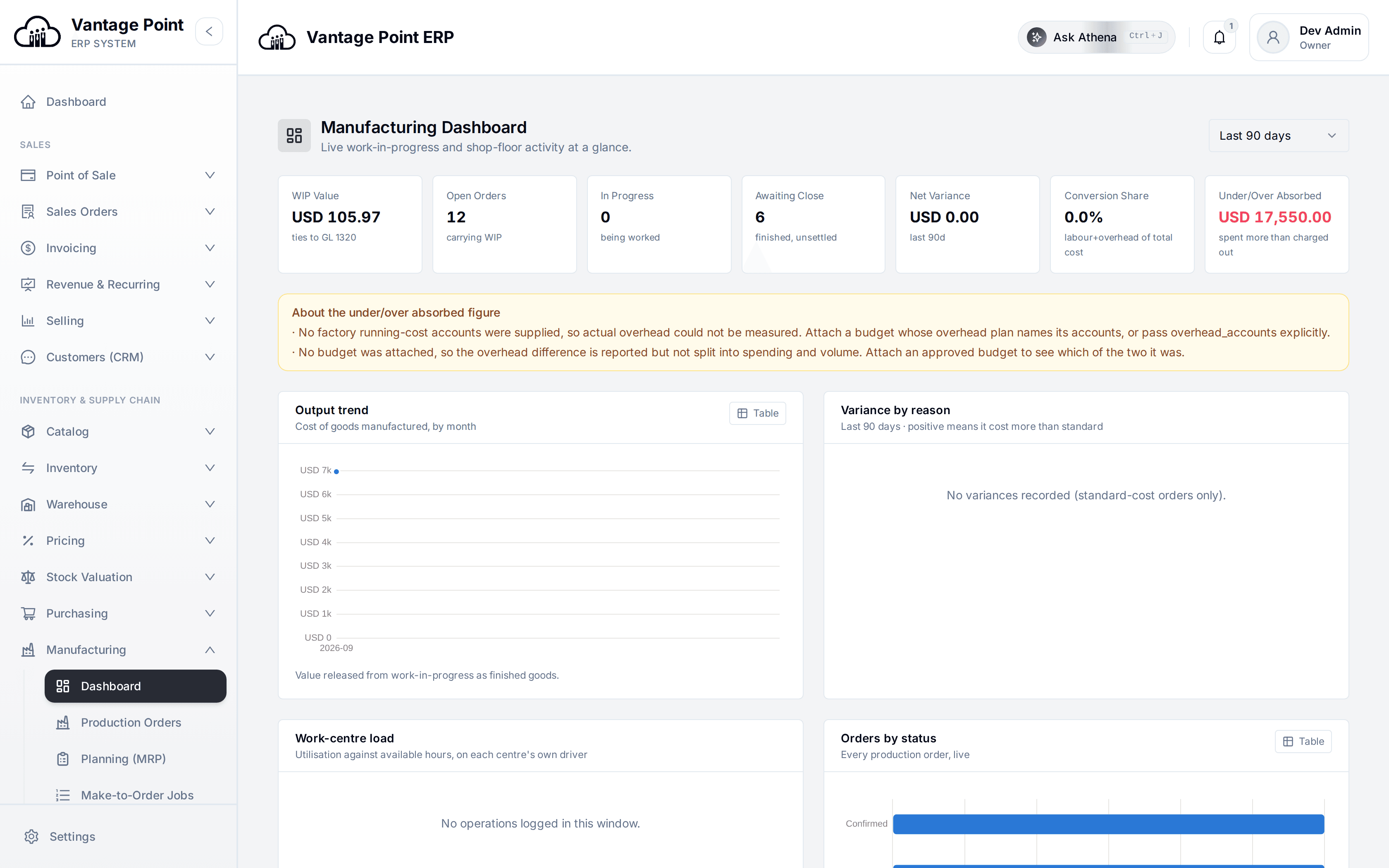
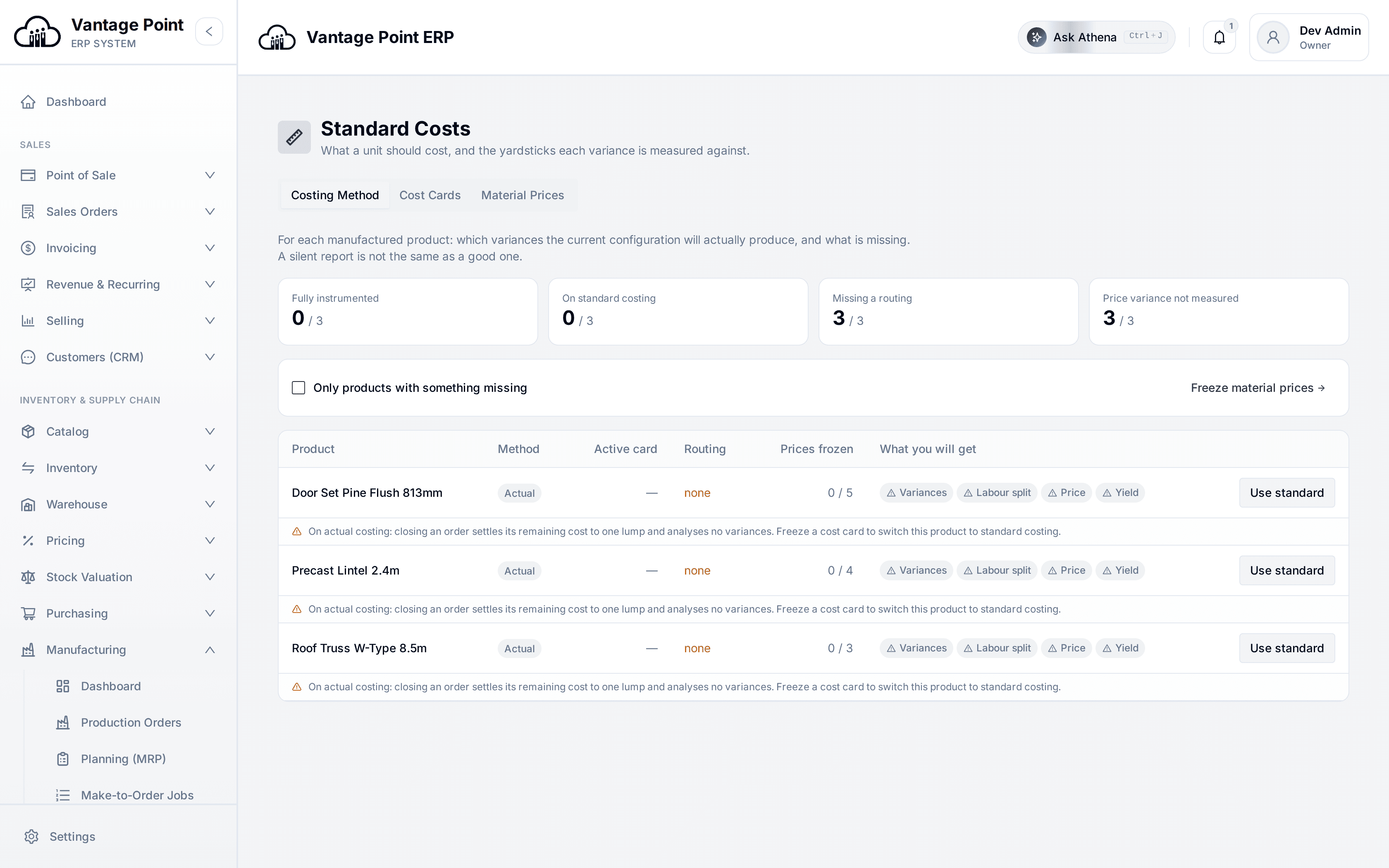
Once standards are set, running against them produces variances broken out into the parts you can act on: material price against material usage, labour rate against labour efficiency. Joint outputs are handled honestly, with cost split across by-products and co-products, and rework goes back through the line without losing what the first attempt cost. Make-to-order jobs can be quoted, take a deposit, requisition their own materials and be costed as objects in their own right.
The factory floor, costed to the ledger.
Materials issued, labour applied and overhead absorbed are all real journal postings. The variance between standard and actual is a number you can act on, not an estimate.
Manufacturing, asked and answered.
Does it calculate the actual cost of a production run?
Yes. Materials issued, labour applied and overhead absorbed are posted to the general ledger as the run progresses, so the finished goods carry a real cost rather than an estimate, and work in progress is a balance you can inspect at any time.
What is a cost variance and what will it tell me?
It is the difference between what production should have cost at standard and what it did cost. Vantage Point splits it into material price, material usage, labour rate and labour efficiency, which tells you whether you paid too much for inputs or used more of them than you should have.
Can it handle by-products and co-products?
Yes. Where one run produces more than one saleable output, the cost is split across those outputs rather than loaded entirely onto the main product, which is what makes the margin on each of them meaningful.
How is rework costed?
Rework goes back through the line as its own work, and the cost of the first attempt is retained rather than written off silently. That keeps the true cost of quality visible instead of buried in the cost of the good units.
Does it plan material purchases from demand?
Yes. Planning works back from demand to what needs to be bought and when, taking into account what is already on order and what is already on the shelf, so purchasing is driven by the production plan rather than by intuition.
Can I budget a factory, not just a business?
Yes. Manufacturing budgets run the full chain from sales to what must be made, to the materials and capacity that requires, to overhead and unit cost, with plan against actual, forecasts and scenario comparison on top.
The rest of the system.
ONE LEDGER UNDERNEATH IT ALLTake the high ground.
Set up your first store, till and ledger in an afternoon.